



I suppose it must have been at the Tate Modern in London, at the start of this century. All I remember was looking at a urinal and thinking, “This is just a urinal”. But for my friend at the time, it was a “brilliant work of art”. We were very young, of course, both recent philosophy graduates keen to avoid anything like a serious job, preferring to booze at any opportunity, read difficult books and debate everything under the sun.
A couple of decades later, after years of robust but friendly sparring, we finally fell out when I asked him at the strained end of a WhatsApp chat what a woman was, and he pretended not to know. It was always going to come to this; the discussions had become fewer and more fraught, the culture wars always at the edge of conversation. But this was the final straw, and neither of us picked up the conversation again, or any conversation, since. I don’t know where he is today, except that he holds a senior position in the British Civil Service, which is exactly what I would expect.
Duchamp’s Fountain1, the artwork we were looking at, was a genuine provocation when it was first exhibited – a clever joke, really. By placing a mundane object in a gallery and calling it art, he was raising real questions about the nature of the medium, about perception and reality itself. These are interesting questions, and we’re still asking them today.
But it’s a joke that only really works the first time. Taping a banana to a wall is amusing, perhaps, but it recycles the same gag, the same provocation, except now the purpose is to elicit “low-status” opinions from “high-status” ones. A snobbery device, in other words.
This would be a minor cultural oddity if it stopped there, but instead it infiltrated our language, then our institutions, and eventually our way of life. Duchamp’s Fountain is the story of postmodernism before postmodernism had a name.

Like many terrible ideas, postmodernism started with a question. The wreckage left over from the Second World War, the incomprehensible scale of the slaughter, the industrialised genocide, the atom bombs – all this brought about by the most advanced nations on earth, the ones that considered themselves civilised. How could the same cultures that brought us the Enlightenment, human rights, individual liberty and the scientific revolution also give us Auschwitz, slavery and the brutal repression of colonised people? As the second half of the century got underway, intellectuals were naturally inclined to question the West’s founding principles and what they saw as the illusion of progress. It was time to interrogate its assumptions, take apart its certainties, and puncture its claim to hold universal values.
Leading the way were the French intellectuals, who in the 1960s and 70s questioned the deepest of those assumptions, beginning with truth itself. Was there really such a thing as “objective truth”, or was it simply an invention of the powerful, something declared rather than discovered? Was "progress" a description of reality or just the story told by whoever won? These are serious questions from which they could make fair observations. They were right to point out that institutions serve their own interests, and grand narratives play a defining role in our understanding and interpretation of the world. The trouble is that the same intellectuals didn’t try to place the answers intelligibly within the larger story of our lives. Postmodernism made interrogating power the overriding intellectual move and the answer to its own question.
Postmodernism doesn’t lend itself to a simple explanation, which is appropriate, as we shall see. However, dig beneath the deliberately impenetrable jargon, and the core claims are as follows. There is no objective truth, only competing narratives. What we think of as “knowledge” is just something the powerful tell us is the case. Language doesn’t describe reality but constructs it. Science, reason, and universal liberalism are inventions of Western minds, specifically male ones, while the Enlightenment idea of the individual with supposed natural rights is just another concept made up by those most likely to benefit from it.
There’s an obvious paradox at the outset. In what sense is it true to say there’s no such thing as objective truth? The question is meaningless because the premise is nonsensical. As Roger Scruton put it, “A writer who says that there are no truths, or that all truth is ‘merely relative,’ is asking you not to believe him. So don’t.”
Despite the obvious contradiction, it’s an idea that has been pushed aggressively by campus authoritarians for decades. No narrative deserves authority, they say, while demanding intellectual obedience to a narrative of their own.
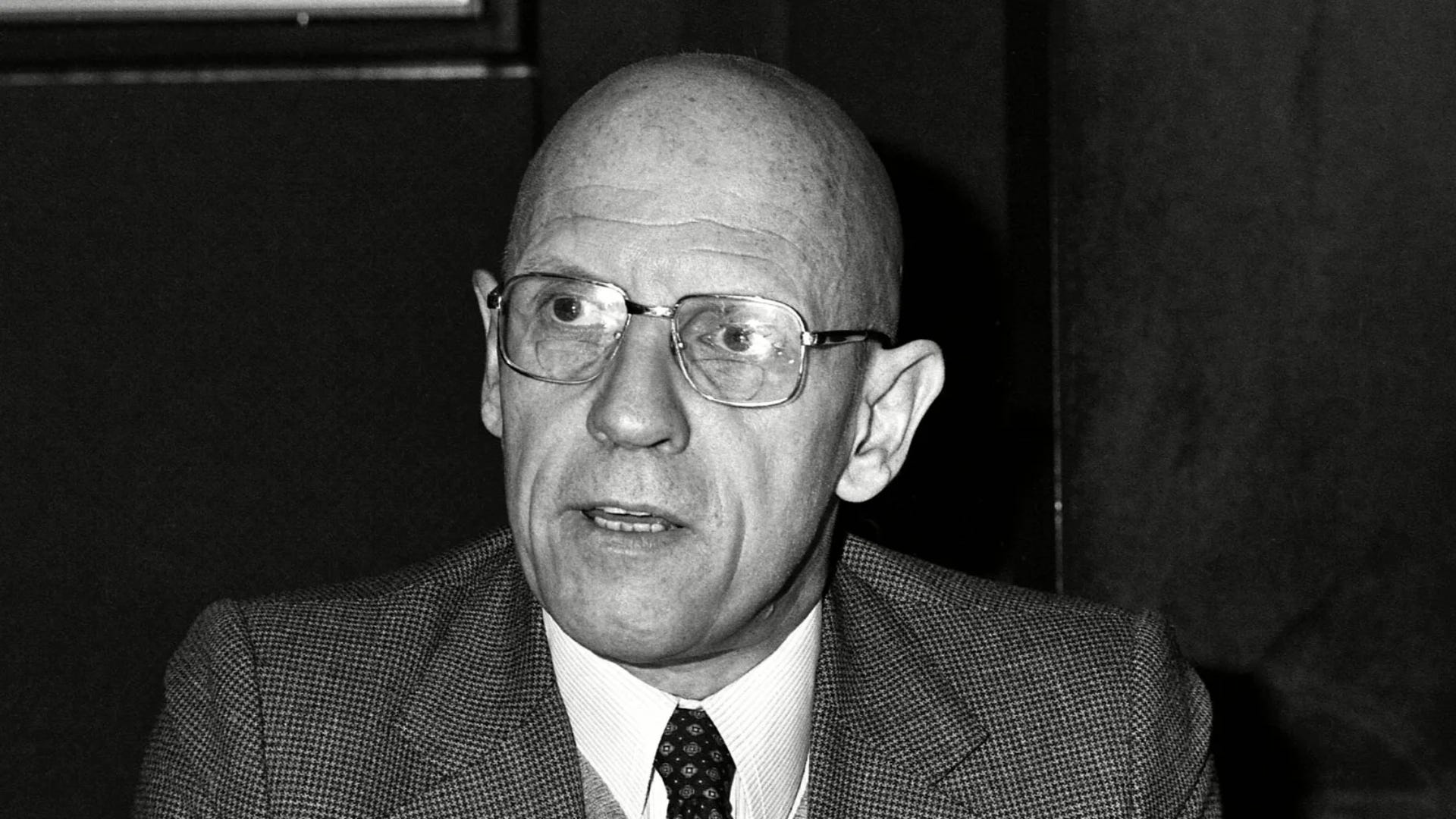
If postmodernism has a main character, it’s Michel Foucault. A brilliant, sexually transgressive2 provocateur who wrote with genuine originality about power, punishment, and the structures that govern how we think, he was also catastrophically wrong.
Scruton registered postmodernism as intellectual fraud early on and pointed to Foucault in particular, whose ideas he regarded as the most dangerous of the lot because they were the most easily weaponised. Foucault’s central insight, that power and knowledge are inseparable, was a half-truth that has cast a spell on the academy, whose graduates see in it a compelling reason to stop making judgments. They know some cultures are better than others, but now they have a reason to pretend otherwise.
Today, Foucault’s influence pervades our institutions at the deepest levels, his designs shaping outcomes even while those who operate the machinery have never heard his name. Every time a claim to objectivity gets treated as an expression of privilege, that’s Foucault. When “lived experience” trumps clinical evidence, Foucault’s fingerprints are all over it. The same when someone argues that standards are tools of exclusion – this is the ghost of Foucault passing through on its way to a bathhouse.
Foucault, above all, was interested in power. His contention was that knowledge is always a product of the dominant structures that produce it. Knowledge is never neutral – it is always formed by someone with an interest in what gets known, enforced in the name of the public good. Hospitals define what illnesses are before treating them as such; psychiatry invents mental disorders so as to make sense of the institutions that bear the name. The prison comes before the prisoner, inventing the category to make sense of its own existence.
What makes Foucault so compelling is that these ideas feel thrillingly subversive, an intellectual exercise in setting fire to the library and analysing the remains. The problem is that if all knowledge is contaminated by power, what do you replace it with? If science is just one more Western narrative, what’s the alternative? If standards are oppression, what do you measure oppression against once you’ve thrown them out?
This is what Scruton was getting at when he observed that some ideas are true but boring, while others are exciting but false. Foucault exemplifies the latter, and what’s more, he never had to answer for these intellectual contortions because he was a philosopher whose job (as he saw it) was to ask questions and bend things out of shape. It’s a different story for policymakers. The people who inherited his ideas, or rather were handed them in a job description, have to run hospitals, child protection agencies, and the civil service.
Inevitably, perhaps, Foucault became an enthusiastic supporter of Ayatollah Khomeini in 1978, praising him as “the old saint in exile”. He championed the Islamic Revolution for casting off what he saw as Western pretensions. Here was a powerful spiritual alternative to the rational, corrupt Western model with all its empty rationalism.
Foucault retreated soon after Khomeini started silencing dissidents and ordering women to wear a veil. But by then the pattern was set, a template for what has followed: Western intellectuals so committed to the critique of their own civilisation that they cannot recognise barbarism when it’s standing in front of them.
Fifty years later, the counter-revolution led by young Iranians desperate for freedom is all but ignored by news outlets like the BBC and the New York Times. The Guardian, which is practically a Foucault newsletter with a sports section, overlooks a genuinely oppressed people living under a theocracy because it long ago decided that the Western project itself is the real oppression.
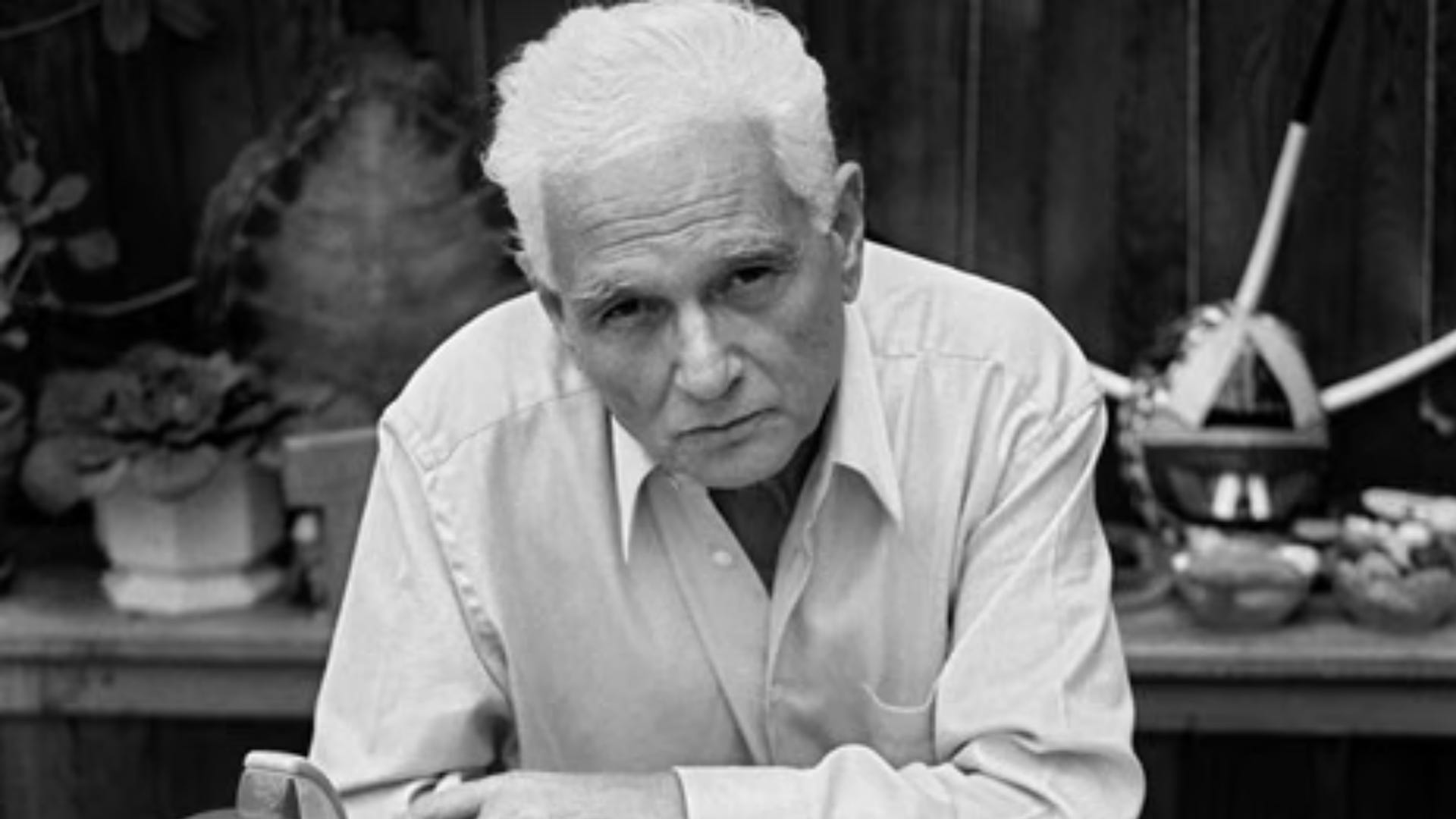
Jacques Derrida, another towering figure of postmodernism, attacked the stability of language itself. According to him, meaning was never fixed, words never referred to anything straightforwardly, and the author’s intention was irrelevant. What mattered was the reader’s interpretation. From here, it’s a short walk to the idea that intent doesn’t matter, only impact. If this sounds familiar, it’s because it’s the logic behind every cancellation and every social media pile-on.
Foucault and Derrida are just the most well-known figures – we can add Lyotard, Baudrillard, and many others to the roster. Taken together, they built an intellectual framework so total in its scepticism that it left no ground to stand on and no tools to build with.
But before we examine the consequences in more depth, it’s worth briefly examining the case for the defence. Many of these thinkers would have despised what became of their ideas. Foucault was arguably a libertarian above all, instinctively hostile to orthodoxy. Derrida’s whole modus operandi was to question everything, including, presumably, the sorts of people who quote him as scripture. Nietzsche, a sort of father figure of postmodernism, would have recognised the woke movement immediately and cast it into the abyss along with all the other herd thinking he so despised. If there’s one thing that unites a postmodern disposition, it’s an attitude of radical scepticism. Their inheritors, by contrast, are zealots.
But this defence only goes so far. You don’t get to build a monument to the idea that all knowledge is bound up in power structures, that claims to truth and objectivity are instruments of domination, that language is unreliable and meaning subjective – and then disown the activists who took you at your word and installed it at the entrance of every institution they could reach.
The woke movement, and progressivism more broadly, simply embraced the logic, found it useful, and upended established norms in its name. What made the upending possible wasn’t the strength of the ideas themselves but a civilisation already weakened enough to accept them.
An autoimmune disorder doesn’t strike a healthy body at random. There must already be a weakness, a system under stress. Postmodernism simply turned the body’s defences against itself. The capacity for self-criticism – essential for progress and error correction in a free and open society – became the disease, attacking the host organism rather than identifying and eliminating external pathogens.
The irony is that the threat didn’t come from outside. It was produced by Western intellectuals at wealthy Western universities, enjoying Western freedoms of speech. It couldn’t have emerged anywhere else. Only a civilisation confident enough in its own ideals of personal liberty and intellectual freedom would allow for such a radical critique of those same values. Postmodernism could never have emerged in an authoritarian state because it required the very Enlightenment values that it set out to destroy.
The question, then, is why the West made itself vulnerable. What convinced its political class and cultural establishment to spread the contagion rather than lock it down?
Three things, in my view, made it possible: guilt, boredom, and an empty church.
Guilt, because intellectuals looked at their recent history and saw gas chambers and gulags, slavery and all the other horrors made possible by an industrially advanced, scientifically minded culture. The healthy response would have been to engrave these crimes upon the Western conscience, commit to never repeating them, and set about reforming what was bad and advancing what was good. And this is largely what happened at first: the Universal Declaration of Human Rights, the civil rights movement. These were signs of a mature civilisation coming to terms with its failures and correcting them. The unhealthy response would have been to conclude that the entire project from the Enlightenment onward was rotten, an edifice built on oppression; that the only meaningful response was permanent self-flagellation and dismantling the whole structure that made these crimes possible in the first place. Postmodernism offered a philosophical framework for the second response, and the guilty grabbed it.
Boredom, because Enlightenment liberalism had succeeded beyond anyone’s imagining. Here was a system that solved many of the problems it set out to solve – so many, in fact, that its inheritors had little left to build. It had written equality into law, banished slavery, and pushed racism to the margins of respectable opinion, all while establishing relatively stable and open societies of unprecedented wealth. The only remaining move for a certain kind of intellectual was to question whether the structures themselves were legitimate. Fukuyama saw this coming. The author of The End of History predicted what would happen when people could no longer struggle on behalf of a just cause because that just cause had been victorious in an earlier generation. “They will struggle against the just cause,” he wrote. “They will struggle for the sake of struggle... out of a certain boredom: for they cannot imagine living in a world without struggle”3.
Postmodernism gave boredom a curriculum and degrees ending in “studies”. It’s a philosophy for people whose material comfort is so total that they can make a hobby of interrogating the epistemology that produced it. This is the hyperprivileged, pronoun-declaring busybody who stalks every utterance for wrongthink. Nobody in a society fighting for clean water has time to wonder whether objectivity is a patriarchal construct.
And finally, postmodernism was made possible by the retreat of Christianity. That may sound strange to those of us who get on with our lives perfectly well without a church to attend or a Bible verse at hand. But drive through any European town, and you’ll find a church soon enough – likely empty, perhaps attracting a handful of pensioners on a Sunday morning.
A visitor from 100 years ago would be astonished by how Christianity has receded into the background of most people’s lives. And yet, despite the retreat, it remains deeply woven into Western psychology. It’s there in our need for dogma, confession and redemption, our moral certainties and the clear lines we draw between good and evil. Postmodernism didn’t fill the space it left – it’s too esoteric for mass adoption as a faith. But it told people they didn’t need to believe in anything universal, that universalism was a contrivance of power, just another narrative to be discarded. It emptied the pews in a way that felt like liberation, but into that space marched every substitute religion of the last thirty years, from critical race theory to crypto cults.

Postmodernism would have been a lively if abstruse intellectual endeavour if it had remained in textbooks and seminars, but its abstractions entered the public domain.
Where postmodernism really announces itself today is in its dismantling of sex-based reality. We are to imagine that human societies, over millennia, were caught in a delusion about the meaning of “woman”. The person most responsible for making this confusion mainstream is Judith Butler, who took Foucault’s idea that power shapes knowledge and applied it to sex itself. Not just gender roles, which are clearly shaped by culture, but the biological categories of male and female. This is how we arrive at pregnant men and women with penises – the human body just another text to be interpreted.
It’s worth quoting Butler at length because the prose style is Exhibit A in a fraudulent intellectual system. This single sentence won the Philosophy and Literature Bad Writing Contest4 in 1998 and will likely never be bettered.
“The move from a structuralist account in which capital is understood to structure social relations in relatively homologous ways to a view of hegemony in which power relations are subject to repetition, convergence, and rearticulation brought the question of temporality into the thinking of structure, and marked a shift from a form of Althusserian theory that takes structural totalities as theoretical objects to one in which the insights into the contingent possibility of structure inaugurate a renewed conception of hegemony as bound up with the contingent sites and strategies of the rearticulation of power.”
Read it again if you like. It won’t help. If you read it backwards, it won’t make any less sense. But don’t for a moment think that’s a flaw in communication – at least, not for Butler and her supporters. The incomprehensibility is the whole point. If you cannot understand the argument, you cannot challenge it. It’s impenetrable by design, immediately creating an in-group privy to the codes who nod along and delight in excluding and intimidating the out-group.
It would be irritating and pretentious by itself, but the meaning supposedly conferred by such gibberish finds its way into the clinician's office, where a counsellor can't ask a distressed teenager basic questions because questioning a child's self-diagnosis would be "invalidating their lived experience". It shows up in the best practices document telling midwives to say "birthing people" while women – actual women, with uteruses and birth canals – push and scream on the ward. Everyone playing this game of pretend knows it's nonsense. They play it anyway, because describing reality in terms agreed on by civilisations for all of recorded history became “oppressive” ten minutes ago.
It's not confined to the left. Postmodernism's offspring include the trans theologian but also the podcaster who says the US government is run by a cabal of satanic paedophiles. The disdain for the notion of truth, one thinking it's a power construct, the other calling it a psyop, is a symptom of the same epistemic rot. Neither has much use for objective reality.
I think about Duchamp’s Fountain sometimes. My friend saw a thrilling provocation – a mocking of the establishment of its day and ours. How he enjoyed dismissing those old-fashioned preoccupations with beauty and truth. Here was a urinal calling itself art, a fuck-you to the suits and stiffs and their reactionary ways.
But that provocation now just is the establishment, absorbed into orthodoxy, written into the curriculum, and demanded of every new recruit – the sort whose job application requires a personal statement demonstrating their commitment to diversity and equity. My erstwhile friend, the civil servant, perhaps reads the statement, perhaps he sits on the interview panel for the next Head of Inclusion and Belonging.
Mockery, we both agreed then, is good. We should mock the powerful, question their assumptions and ridicule their dogmatic certainties. A free and vibrant society depends on it. But postmodernism took that instinct and deadened it into new assumptions. It became a joke nobody laughed at because laughing at it would cost you your job.
The result is a civilisation that, far from defending its own values, is preoccupied with undermining them, installing status-hungry people in its institutions who have convinced themselves that Western values are oppressive by definition and that gutting them signals virtue and sophistication.
Postmodernism could only happen in a civilisation like ours, making a fatal weakness of its greatest strengths. These are ideas that consumed the intellectual foundations that gave birth to them. Along the way, they ended friendships and ways of talking about reality that allowed for scepticism and questioning without pretending not to know what’s true, what words mean, what a woman is.

I try to do two things with The Gadfly: skewer the absurdities of our age, and make sense of the ideas behind them. If you’d like to support the work, please subscribe or consider upgrading.
You might also like:


Marcel Duchamp submitted Fountain – a standard porcelain urinal signed “R. Mutt” – to the Society of Independent Artists exhibition in New York in 1917. It was rejected, despite the Society’s policy of accepting all submissions. The original was lost but there are replicas authorised by Duchamp decades later and this was one of them. Fountain predates postmodernism by half a century and is more accurately a Dadaist piece, but it is widely regarded as the prototype for postmodern art’s attack on the categories of meaning, beauty, and authorial intent.
Foucault was famously a frequent visitor to the San Francisco bathhouses in the early 1980s and died of AIDS-related illness in 1984. Britannica notes that he “regularly made the issues that most troubled him personally — emotional suffering, exclusion, sexuality — the topics of his research.” He relished his celebrity as a subversive and was also among a group of French intellectuals – including Sartre and Derrida – who signed a petition calling for the decriminalisation of sex between adults and minors.
Francis Fukuyama, The End of History and the Last Man (1992). Fukuyama argued that liberal democracy represented the final form of human government. He later revised his optimism considerably.
The Bad Writing Contest was run annually by the journal Philosophy and Literature. Butler’s win was not universally celebrated by her supporters, who argued the contest was itself politically motivated. They were probably not wrong that it was politically motivated. They were wrong that saying so made Butler’s sentence any clearer.
If you're reading this, you've made it to the end of a very long piece. Thanks for taking the time! I hope it gave you something to think about. And thanks, as always, to the Gadfly's supporters who make this possible.
If you've stumbled upon this piece and found it useful, do subscribe and click the like button. It helps others find it.
P.S., I usually post essays on Sundays. However, since the schedule is a social construct, I'm posting this one today. Enjoy your weekend and Happy Easter.
Masterful essay, thank you. Happy Easter to you too. The Gadfly and Danny Burmawi's substack are my best discoveries so far this year. Funniest: "the Guardian = a Foucault newsletter with a sports section". Scruton's "Frauds, Fools and Firebrands" is one of my favourite books too.