
Roger Scruton spent his career as a conservative philosopher in the overwhelmingly left-wing world of British academia. His colleagues reviled him, many grudgingly conceding he was a brilliant and original thinker. In what looks like a throwaway line, Scruton observed that:
“Left-wing people find it very hard to get on with right-wing people, because they believe that they are evil. Whereas I have no problem getting on with left-wing people, because I simply believe that they are mistaken.”
It’s a devastating diagnosis. What Scruton identified is the operating logic of a moral cosmology, not a political position: the view that what matters when evaluating a claim about reality is the moral worth of the person making it. To be right-wing is to be evil, and any claim made from that position is merely an expression of the same.
Of course, conservatives also recognise moral distinctions between good and evil. The difference is that, like Scruton, they are less likely to treat them as a method for determining what is true.
This would be academic but for the fact that most Western institutions have become hostile environments for those on the “wrong side” of that equation. Millions of good and decent people today will habitually self-monitor for ambiguous utterances that might be misread or used against them. In the background, just out of sight, someone is passing their comment – or more likely their vibe – under a moral Geiger counter, checking for the crackle of wrongthink.
The cost is real. A mature civilisation ought to be able to have differences of opinion without one side reducing the other to evil. That we can’t is a symptom of a society no longer at ease with itself.
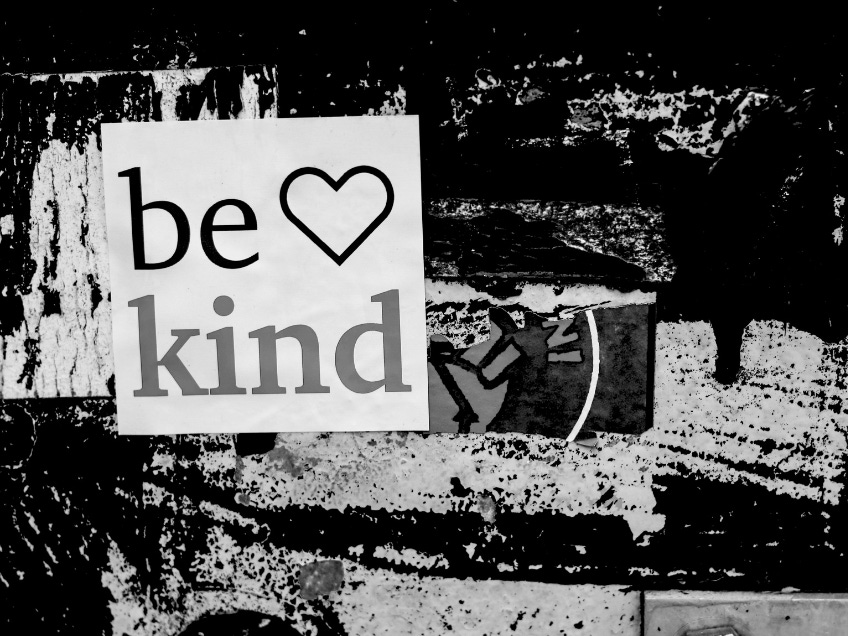
The left’s division of the world into good and evil rests on a powerful myth, woven so deeply into left-wing identity that it’s become invisible: that the left is more humane, more compassionate, and more morally serious than its opponents. Not more correct – more good.
The utopian impulse, the uncompromising pursuit of the ideal society over the flawed but principled one, reveals a dark paradox: the willingness to license suffering and oppression today, so long as they are in service of a vision purged of both tomorrow. And purged in particular of those who stand in the way. The gulag is permissible – essential, even – to realise such an ambition, a necessary evil toward a virtuous end. Sacrifices must be made, hard decisions taken with unsentimental resolve. Today’s body count is irrelevant. Everything is subordinate to chasing the new dawn.
The journalist Peter Hitchens spent his youth actively seeking a British Bolshevik revolution. He has described this from the inside with brute honesty. He would have done terrible things to his opponents, he says, if he’d ever achieved the power he sought, not out of cruelty but out of certainty. It was the certainty that was dangerous, and upon finally seeing it, he got out. Most don’t, because getting out requires surrendering the thing the myth most reliably provides: the clean division of the world into good and evil, and the knowledge of which side you’re on.
In 1994, Eric Hobsbawm, one of the most eminent historians in the English-speaking world, was asked a simple question: if he had known that millions were dying in the Soviet experiment, would it have changed his commitment to Communism? Hobsbawm said probably not. The journalist Michael Ignatieff pressed the point. Might the loss of fifteen or twenty million lives have been justified if the revolution had succeeded?
Hobsbawm’s answer was a single word.
Yes.
There it is. A lifetime’s scholarship and ideological conviction compressed into a syllable, a black hole of moral reasoning with the weight of twenty million dead. Hobsbawm doesn’t flinch because the matter is settled, the reasoning sound. He can pass off unimaginable cruelty as the cost of a more radiant tomorrow. What’s a million dead next to the grander project, the millions more who will inherit the earth when the destination is finally reached?
What sustains it is the claim that this is all about intentions rather than outcomes (which, rather conveniently, is what makes it impervious to evidence). When left-wing policies fail – and they fail spectacularly in ways that damage the people they claimed to protect – the governing framework is never brought under scrutiny. The failures are written off as sabotage or as evidence of insufficient zeal. It’s the unmanageable complexity of the problem, the unwillingness to make the necessary sacrifices. And always, above the wreckage float the good intentions held by people incredulous as to the outcomes. Their own kindness is never called into doubt. The myth is preserved, and the mission recharged for another day.
The myth of kindness is ready-made for the young person arriving at university with the desire for meaning we all have at that age. The myth doesn’t have a required reading list or entrance test. One simply has to be open to it. What follows is the warm embrace from the professorial class that says: you’ll fit right in here; just be on the side of the right. And by right, they mean left – the side that cares; the side of the good.
The social rewards are immediate and obvious to the status-minded and cynical, but the myth of kindness seduces well-intentioned young people above all, whose primary need is to mean something and who are naturally drawn to activism and the camaraderie that comes with it. Many grow out of this mindset, of course, and even go on to become its harshest critics. But others will swap the placard for a lanyard and carry the same ideas into institutions, producing the ugly political and moral confusions we’re all battling with today.
However, it’s a serious mistake to dismiss all left-wing compassion as fraudulent. It’s often real. The mother who lies awake worrying about refugee children isn’t playing to an audience at that moment. Teachers who fight for struggling pupils aren’t faking it to win Teacher of the Year. When the right dismisses all of this as virtue signalling, it reveals its own form of cowardice, a refusal to acknowledge that some on the left are motivated by genuine compassion. Much easier to mock them.
But the crucial point is that these virtues are incidental to political beliefs, not framed by them. Right-wing people can also lose sleep over struggling pupils and the plight of genuine refugees because the human conscience isn’t tribal but moral. Turning the moral into the political is the point at which the left turns compassion into ideology, and ideology, as Chesterton warned, is where the trouble starts. As he put it:
“The modern world is full of the old Christian virtues gone mad. The virtues have gone mad because they have been isolated from each other and are wandering alone”.
A virtue wandering alone doesn't ask where the money went. Compassion detached from prudence doesn't notice when the policy harms the people it was designed to help. It can't tolerate the possibility that it has become cruel, and so it stops looking.
When we think of the horrors of the grooming gangs and the depravity of fast-tracking children into irreversible treatments, we see people motivated by status or cowed by threats to their reputation. Sociopaths and cowards dominate, but they’re given cover by the clinician who genuinely believes they're being compassionate; the well-intentioned official who thinks naming the patterns around grooming gangs feels wrong. Morally confused, certainly, but the impulse to do right is real. Unmoored from every other virtue that once kept it in check, the results are devastating.
The right sees the damage and concludes that the compassion was always fake. The left sees the compassion and can’t accept that it produced the damage. Both are wrong, but the second error is the one with institutional power.
It’s no use looking for the empirical foundations to the myth of kindness; they don’t exist. What we’re really talking about is what Nietzsche called God’s shadow: the ghost of Christian morality, but with God removed and politics installed in his place. The modern left doesn’t experience itself as one political tradition among others, liable to be wrong, capable of causing harm. It experiences itself as the force opposing evil. This is a theological claim, and once understood as such, it becomes obvious why competing evidence is useless, because the left didn’t arrive at its views through evidence but through a belief system with villains and saints, true believers and heretics.
This is not simply a universal feature of political tribalism, though tribalism is part of it. What makes the left specifically susceptible is that its entire project is fundamentally moral. Conservatism can fall back on tradition, order and stability. Goodness emerges through these things. For the left, goodness is foundational. When the outcomes are bad, the goodness must be protected at any cost, because to admit that the compassion caused the harm is to admit that the foundation is an illusion.
The myth survives everything, not just because it flatters people into believing they are good and kind, nor simply because it rewards enormous status for speaking the approved idiom on sanctioned topics. But because the conviction that the other side is evil hovers over everything. The existence of genuine monsters vindicates all that follows.
Nothing in recent history has tested this like October 7. The kindness myth was handed the most extreme possible counter-evidence: the people designated as victims committing acts of savage, premeditated violence against civilians, babies, children, and the elderly, while the people designated as oppressors became the victims. The narrative couldn’t absorb it. So it didn’t. Instead, the response was to turn everything on its head. Within days of the massacre, the sadists were the real victims, while their actual victims had what was coming to them. It was merely the response of the oppressed to their oppression. The kindness myth remained intact.
The most revealing image was not the marches that followed October 7 but the ripping down of hostage posters. Here were photographs of kidnapped children and grandmothers torn from walls by people whose faces were contorted with rage and hatred. This is what happens when you’re presented with the mirror of your own side’s evil. They were torn down because they were evidence. The faces of Jewish victims had to be removed from sight because their existence as victims contradicted the story on which an entire moral identity depended.
The myth of kindness produces moral blindness, but it also cultivates the enemies that sustain it. Today’s hard right is largely a consequence of one side declaring its monopoly on virtue while denigrating its opponents as morally decrepit and intellectually stunted; in a word, evil. When institutions are captured by people whose primary commitment is to their own moral self-image, and when a democratic backlash – Brexit, Trump – gets treated as moral deformity rather than legitimate dissent, the result is to radicalise dissidents rather than persuade them. The emergence of genuine fascists is the vindication that the myth was waiting for.
People do escape the myth’s hold. It can be examined and rejected; Hitchens is the proof. But it requires surrendering certainty, community, and knowledge of which side you’re on. Most find the price too high because the myth is comfortable.
Scruton was too generous. It’s not that the left finds it hard to get on with right-wing people because it thinks them evil. It’s that the myth demands them to be evil. Conservatism, whatever its failures, is a position. The left, in its current form, is an identity – one that requires an enemy to remain coherent. Scruton could afford to think his opponents were merely mistaken. The kindness myth cannot afford the same generosity, because a mistaken opponent might be reasoned with, might even be right. Better, then, that the opponent is evil. Without the devil, there’s nothing to fight for.
I try to do two things with The Gadfly: skewer the absurdities of our age, and make sense of the ideas behind them. Some pieces take an afternoon. This one took a month. If you’d like to support the work, subscribe or upgrade.
You might also like:


You’ve made it to the end! Thanks for reading. I hope it gave you something to think about or argue with. It’s the closest I’ve come to stating what I actually believe – about the left, about conservatism, and about what’s actually at stake. If the thinkers mentioned here are new to you, my quotes post on conservative thinking is worth a look:
https://www.gadflynotes.com/p/quotes-on-the-conservative-disposition
Very well put - thank you! Being kind has terrible consequences that have to be faced.
In the days when people were Christians, everyone had to accept the need for repentance. People were asked to be humble in the face of things they didn't fully understand. They prayed for grace. They had an intergenerational community to belong to - which provided perspective on life, death and suffering. All that has gone now, for almost all people. There are no checks on human capacity for hubris. You see the consequences everywhere.