

Killed by the Revolution He Admired
A Marxist academic died defending the regime that killed him. The pathology that got him there is thriving.

Late on 22 December 1978, in a government guesthouse in Phnom Penh, the Scottish academic Malcolm Caldwell said goodnight to Elizabeth Becker, a journalist with whom he had spent the evening arguing about the country now ruled by Pol Pot.1 Caldwell was a Marxist lecturer at the School of Oriental and African Studies (SOAS) and one of the Khmer Rouge’s most devoted Western defenders. Earlier that day, he had been granted an audience with Pol Pot himself. He returned euphoric, like a man at last in possession of undeniable truth, impatient to convert those around him.
Becker was sceptical. She had seen enough of Democratic Kampuchea in the preceding days to recognise a country brutalised and silenced by a murderous regime. Caldwell had been guided through the same eerie, tightly controlled tour, and both saw the same things. But where Becker saw evidence of concealment, Caldwell saw a revolution maligned by its enemies. Reports of atrocities were the usual imperialist propaganda, he insisted. Neither persuaded the other, and they retired for the night.
Not long afterwards, Becker was woken by gunfire. When she opened her bedroom door, she faced a young man pointing a pistol at her. After begging him not to shoot, she locked herself in the bathroom. Caldwell, she soon learned, had been shot dead in his room.
What motivated the killing? Was it a direct order from Pol Pot? An internal purge? A Vietnamese operation ahead of the imminent invasion? Nobody knows for sure, but Becker’s verdict, later recorded in her book,2 holds for every possibility: “His death was caused by the madness of the regime he openly admired”. Whoever pulled the trigger or gave the command, Caldwell was a true believer destroyed by the thing he believed in – still defending it only hours before he died.
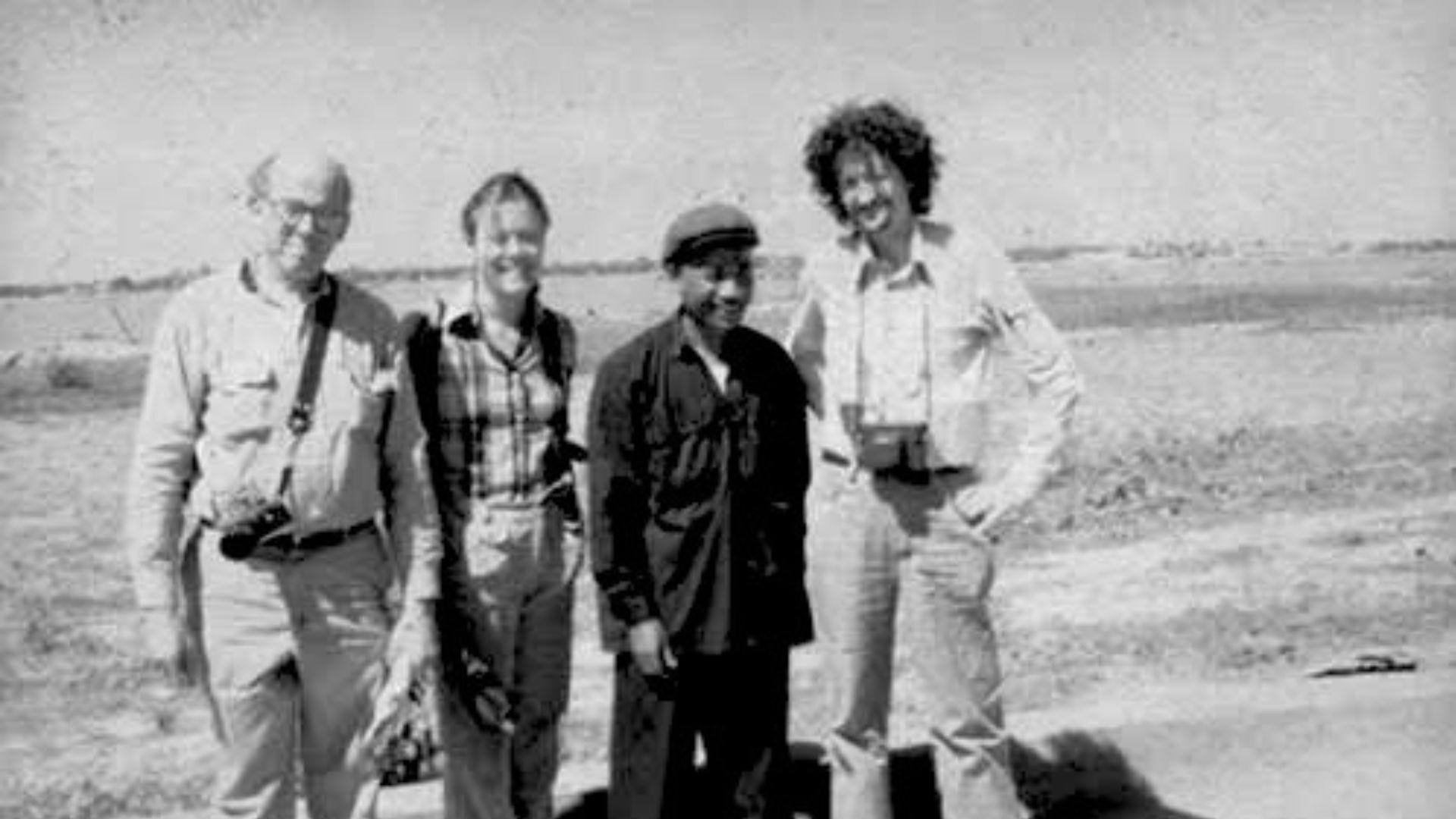
Caldwell was unusual in that he was both a true believer and a useful idiot – indeed, the quintessential example of each. But it’s crucial to note that these descriptions come from different directions. Useful idiot tells us whom his convictions served. It tells us far less about what those convictions did for him and why he held them in the face of evidence pointing the other way. The label is well-earned, and there's a grim satisfaction in the story: we congratulate ourselves on being less foolish. But Caldwell was an intelligent man, a family man and by Becker’s own account, “a lovely man, very funny, very charming”. Yet he still needed the murderous regime to be innocent. Why?
There are obvious answers. Caldwell had invested years in his political beliefs and staked his academic reputation on them. He was ideologically committed. One of his students, Walter Easey, says of Caldwell that he converted to “a fierce and angry communism”3 (I’m not sure there’s another kind). Admitting that the Khmer Rouge was monstrous would have meant admitting that its supposedly reactionary critics had been right. There was status in seeing through “imperialist propaganda”, just as there is status now in holding the correct opinions and advertising them to the correct people – peer approval in Caldwell’s day, clicks and likes in ours. We’re all reluctant to discover that our enemies were right about something important, especially when our friends are watching.
I’ve known Caldwell types in my time, and you probably have too. As a student, I worked with one in a bar on my weekends and was frankly a little in thrall to him. I had no idea what I was for. He knew exactly. He was going to be an intellectual, and he would solve the problem of the world, which (it became clear) was other people. He was vain and knew everything as all twenty-somethings do, but he carried it with genuine conviction. I envied the certainty more than I like to admit. He had the whole thing settled at twenty-two, whereas I couldn’t have told you what my following week was for.
But status and vanity don’t do enough to explain what we’re looking at here. Plenty of people cling to mistaken opinions without travelling across the world to flatter a mass murderer. The question that interests me is what a totalising belief does on behalf of the person who holds it. What uncertainty does ideological conviction remove? What psychological needs are met by holding to beliefs that fall apart under honest inspection? It interests me because the pathology is one we all recognise. The hashtags, slogans and ritual denunciations filling every newsfeed show us what that looks like today.
One possible answer begins with freedom, or rather with the fact that freedom is heavier than its admirers usually admit. This might seem paradoxical. Surely someone who prizes freedom would be the first to condemn those who take it away. But I’m talking about a different kind of freedom, the existential one.4
For most of human history, the largest decisions in a person’s life had already been made by the time he was born. He inherited a faith, a place, a social station and a set of duties. This did not necessarily make life good, and often it made life wretched. But it made life simple, much like a script is written for any actor on the stage. One need not improvise but simply follow the directions, oppressive as they may be.
The modern world offers a very different stage. In the democratic West, we are endowed with freedoms unimaginable to most of our ancestors. We can switch jobs, move countries, change gods, leave husbands, and start over halfway through. These are gains our forebears died for, and I wouldn’t trade them for anything – and (I’m quite sure) neither would you.
Yet for every hard-won freedom, there’s a question. What is the day for? What does a good life look like? Who should I love, which god should I worship, and how do I know I’m doing it right? There’s no script for this, and we must work it out as we go. Every word and action opens up new possibilities while closing off a thousand others. When things go wrong, the consequences are ours to bear alone.
But what does a person actually do with the freedom to author his own life?
Picture a man lying in bed at one in the morning, scrolling through political reels he no longer even enjoys. TikTok has learned which content keeps him engaged – that is, bristling with fury at a world going to hell. Depending on his tribe, the villains are globalists and woke activists, or billionaires and fascists. Nobody is forcing him to watch this, and he knows, on some level, that this is doing him no good, just as he knows junk food does him no good. He can close the app whenever he likes, and he will, as soon as this Piers Morgan segment is over. By any conventional measure, he’s a free man doing as he pleases. And yet his thumb still flicks through an infinite scroll, stopping at the next piece of outrage.
Whatever this is, it isn’t self-authorship. We’re watching a sovereign individual, with every freedom in the world available to him, hoping something or somebody will switch off his phone and tell him what to do.
This was the predicament Erich Fromm explored in a book suitably titled The Fear of Freedom,5 in which he identified two kinds of freedom: freedom from and freedom to. The first kind is what modernity delivers in the way of liberation from external authorities and social hierarchies – the serf untied from the lord, the slave free from his master. The second kind is freedom as personal autonomy. This is about the freedom to direct one’s own life, create meaningful relationships and do productive work via choices made by the individual, rather than through coercion.6
The trouble is that the first kind of freedom doesn’t automatically produce the second kind. Modernity may have freed the individual from traditional authorities, but that same freedom “though it has brought him independence and rationality, has made him isolated and, thereby, anxious and powerless”. Faced with that isolation, the individual seeks some escape. The very chains he has cast off now look like the ones that offered security. The failure to create becomes the urge to destroy; the freed self is now a burden, and surrendering it to an authority looks like its own reward. A mass movement can offer the perfect solution: an authority to obey, an enemy to destroy and a crowd in which the troublesome self can disappear.
Fromm was trying to understand what had happened to Germany. How did one of the most civilised and advanced nations on earth give way to torchlight parades and the dictates of a malignant narcissist?7 His conclusion was that fascism, far from being a bewildering aberration, was a monstrous answer to a real question. Freedom had left people exposed, and the movement promised to cover them again. They had only to obey. How else to explain why “millions in Germany were as eager to surrender their freedom as their fathers were to fight for it”?
Fromm’s analysis doesn’t fit neatly onto Caldwell, however. The Scottish academic was not trapped inside Democratic Kampuchea. He was not coerced by the Khmer Rouge. He was making his name at SOAS, enjoying all the freedoms of one of the most liberal countries on earth – the sort of liberty the regime had abolished. Indeed, only a liberal society like Britain could produce someone like Caldwell, making a career of blaming the West for the sort of oppression he admired in its enemies. And if that sounds familiar, it’s because it’s practically the job description of the Western academic today. If Caldwell were alive now, we know what his Bluesky would look like.
Perhaps the burden from which Caldwell sought relief was closer to uncertainty. A doctrine that explains everything spares its adherents the anguish of an ambiguous universe. It hands them predetermined principles, a framework, and a system through which to make sense of the world and one’s place in it. It offers more as well: a cosmic narrative, a destination that can absorb the cost of revolution – the corpses pointing towards the better world to come.
Eric Hoffer took the argument somewhere darker in The True Believer.8 Hoffer was entirely self-educated and spent his working life as a longshoreman on the San Francisco docks. Without even a degree to his name – or perhaps for that reason – he produced a clearer account of the fanatic than anything to come out of the academy. Where Fromm begins with the burden of freedom, Hoffer turns to the person who finds his own life unbearable.
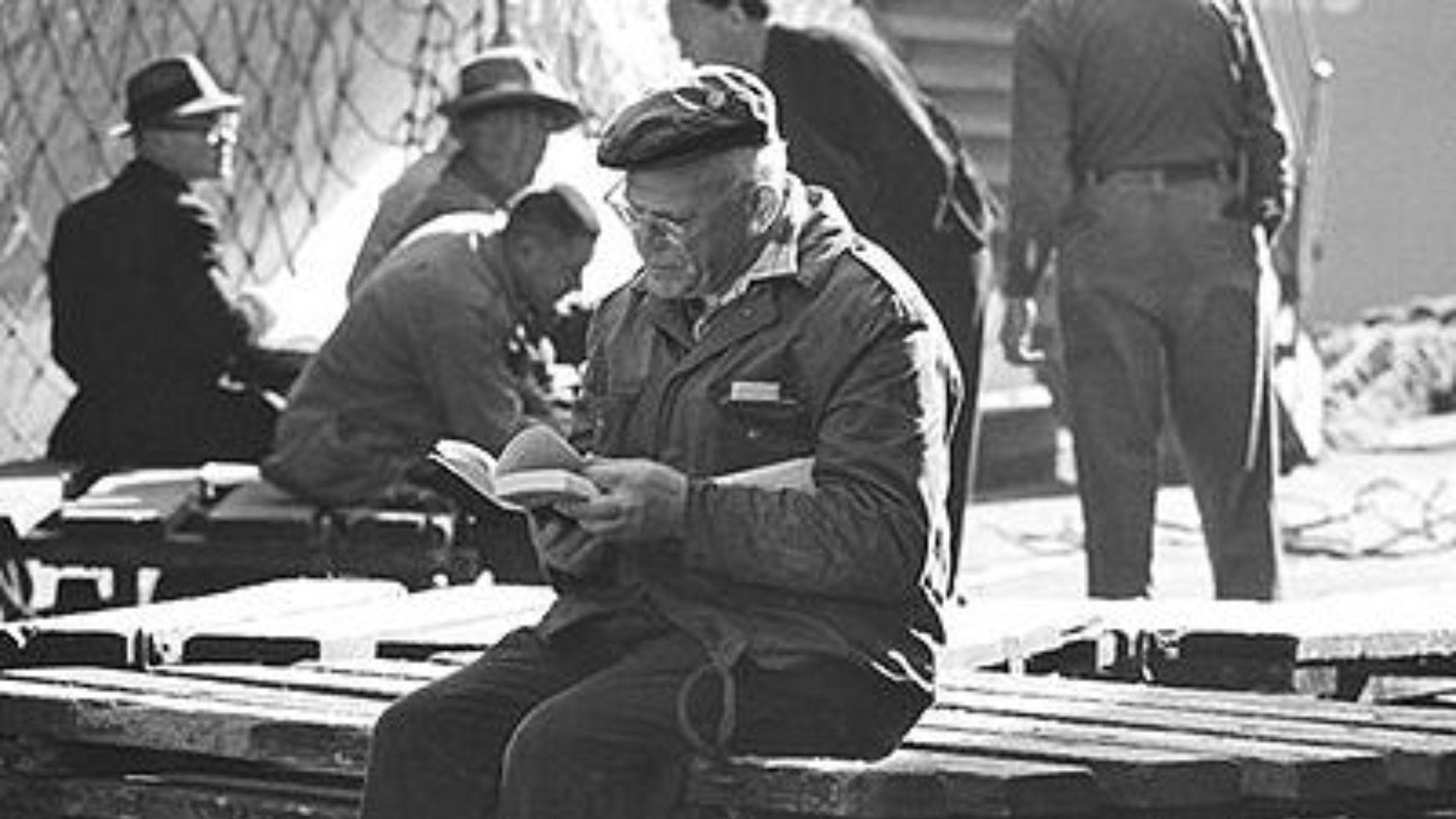
The fanatic, seeing his individual existence as “spoiled or wasted”, yearns for a cause to dedicate himself to, nursing his grievances all the while. What he wants from that cause is not freedom from restraint but freedom from responsibility – and, beneath it, anonymity: to be absorbed into the whole, one thread among many, the personal inferiority that felt so exposed now obscured. A mass movement offers precisely this, neatly packaged with a new identity, an enemy, and the thrilling possibility of starting over as someone else, someone with renewed purpose. No wonder the fanatic, as Churchill observed, cannot change his mind and will not change the subject.9 He’s found his calling.
But Hoffer makes an even more unsettling claim: that the content of the belief may be far less important than we like to imagine. Communism and fascism might present themselves as opposite ends of a spectrum, yet both draw on the same fervour, the same promise of self-transcendence. This horseshoe fits the fanatic regardless of the doctrine: the communist of one decade could just as easily be the fascist in another. The doctrines change, but the needs being met look ominously similar.
The most important thing they offer is an enemy. As Hoffer put it: “Mass movements can rise and spread without belief in a god, but never without a belief in a devil.”
For Caldwell, the devil was (naturally) Western imperialism, which provided more than just an object of hatred. Inconvenient facts could be dismissed as propaganda from a West all too adept at managing the narrative. Reports of atrocities were tainted by their source. Refugees could be discredited, and journalists were the dupes of governments manufacturing lies. Evidence against the revolution became evidence of the lengths to which the West would go to destroy it. This is how Caldwell and others who shared his convictions neutralised anything that threatened their worldview.
Consider François Ponchaud's Cambodia: Year Zero, the first catalogue of the genocide. Caldwell had already dismissed its author without reading it – relying instead on Chomsky, who had questioned the refugee testimony the book drew upon. Becker couldn't get over it: "The fact that Malcolm, a professor, had not read it before he went, that I couldn't believe. I think it was almost ideological that he didn't read it”.
Shared hatred is powerful and intoxicating. It binds the believer to his fellows in the movement, but more than that, it relieves him of the need to consider what his opponents are actually saying. If the enemy is sufficiently wicked – and the West undoubtedly was in Caldwell’s mind – then debate itself becomes suspect. To engage is to lend the devil credibility, as though he might have an argument rather than another trick. There is nothing to learn from the enemy and everything to lose, including the certainty of one’s own convictions. Doubt itself begins to look like betrayal.
By the time Caldwell arrived in Phnom Penh, his beliefs – already applauded by colleagues and students at SOAS – were operating as a sorting system for reality. Months earlier he had written in the Guardian rubbishing reports of a Khmer Rouge genocide, citing the Kampuchean Information Minister, Hu Nim, who blamed the deaths on America. Hu Nim had by then been tortured to death at S-21, the regime’s interrogation centre a few streets from where Caldwell would sleep. Any suffering he witnessed on his guided tour had a purpose. The deserted capital looked like a triumph of political will rather than mass coercion. Here he was, a representative of the enlightened few who had seen through the lies believed by ordinary people. And now, an invitation to meet Pol Pot in private. Here was recognition from history itself.
Perhaps this explains the euphoria Becker described on his return. Caldwell had not merely found a revolution to support. He was now its leading intellectual champion in the West. The true believer finds vindication, his surrender both freeing and binding, the self unburdened yet magnified.
This act of surrender never travels under that name, of course. Nobody announces that they are handing back the burden of being a person. It goes by words like “solidarity”, “liberation” and the “cause”. The true believer doesn’t experience himself as fleeing anything. Quite the opposite. He is finally arriving.
No one described the burden of freedom better than Sartre. “Condemned to be free” is his phrase, and the verb is deliberate – not blessed or relieved but condemned. (Of course, this is the man whose other most famous phrase is “Hell is other people”, from his play No Exit. He wasn’t describing the French, or not only.) But it was in his masterwork, Being and Nothingness, that he built an entire philosophy around the existential freedom that precedes our essence. There’s no human nature to fall back on, no script to read from, no God to guide you. Circumstances may limit what’s possible, but your choices within them are still yours to make. Even obeying a direct order is a choice to obey. The anguish you feel in the face of such freedom is not a passing psychological malady but the very truth of your condition making itself known to you in no uncertain terms.
Naturally, since anguish is an unpleasant feeling, the instinct is to evade it, deny it, or pretend it’s something it’s not. Sartre gave a name to this evasion: “bad faith”. He took the example of a waiter, who disappears into his role, behaving as though he were merely a waiter rather than a man choosing to serve. And yet there is something optimistic in this terrifying lack of excuses. Whatever our circumstances, we remain responsible for what we make of them. Existence, says Sartre, precedes essence. “At first he is nothing. Only afterwards will he be something, and he himself will have made what he will be”.
Sartre’s early work had a considerable influence on me as a young man, and I came perilously close to describing myself as an existentialist at one point. I still think there’s a great deal of truth in it. Which makes what came next harder to explain.
It may not astonish you to learn that Sartre’s philosophy took a turn for the worse with the arrival of Marx. His Critique of Dialectical Reason might be seen as a response to Marx’s injunction to change the world, not merely describe it. As he became more political with age, he saw that his philosophy of freedom was no use to the starving, overworked factory hand. Telling a labourer he was “radically free” in any language, let alone French, would merely antagonise someone born into brutal systemic constraints. He needed a philosophy that could explain how human beings are fundamentally free, yet constantly find themselves trapped in dehumanising systems. Sartre saw that we use our freedom to create these systems – economies, cities, tools – but over time they crystallise into rigid structures that turn around and dominate us, acting like an oppressive force of nature.
Sartre’s exit was what he saw as the moment of collective awakening, the “group-in-fusion” – isolated individuals suddenly acting as one against a common threat. It’s the crowd storming the Bastille, a scattered people joined in a single purpose. But this fusion cannot last, and once the danger has passed, the group starts to dissolve. Its members try to preserve it through a pledge of mutual loyalty, and from that pledge arises what Sartre called “fraternity-terror”. Betrayal is met with punishment in the name of the group. A brotherhood, then, in the way a firing squad is a brotherhood.
This was a necessary evil, you understand. In certain historical moments of extreme oppression – anti-colonial struggles, say – a group might find violence unavoidable to overthrow an even greater, institutionalised terror. Somehow, Sartre managed to rationalise the brutality of Stalinism, Maoism and Castro’s Cuba under these terms. Later, he would defend the Palestinian attack on Israeli athletes at the 1972 Munich Olympics as a terrible but necessary weapon of the oppressed.10 It is not a stretch to imagine what view he would take of Hamas.
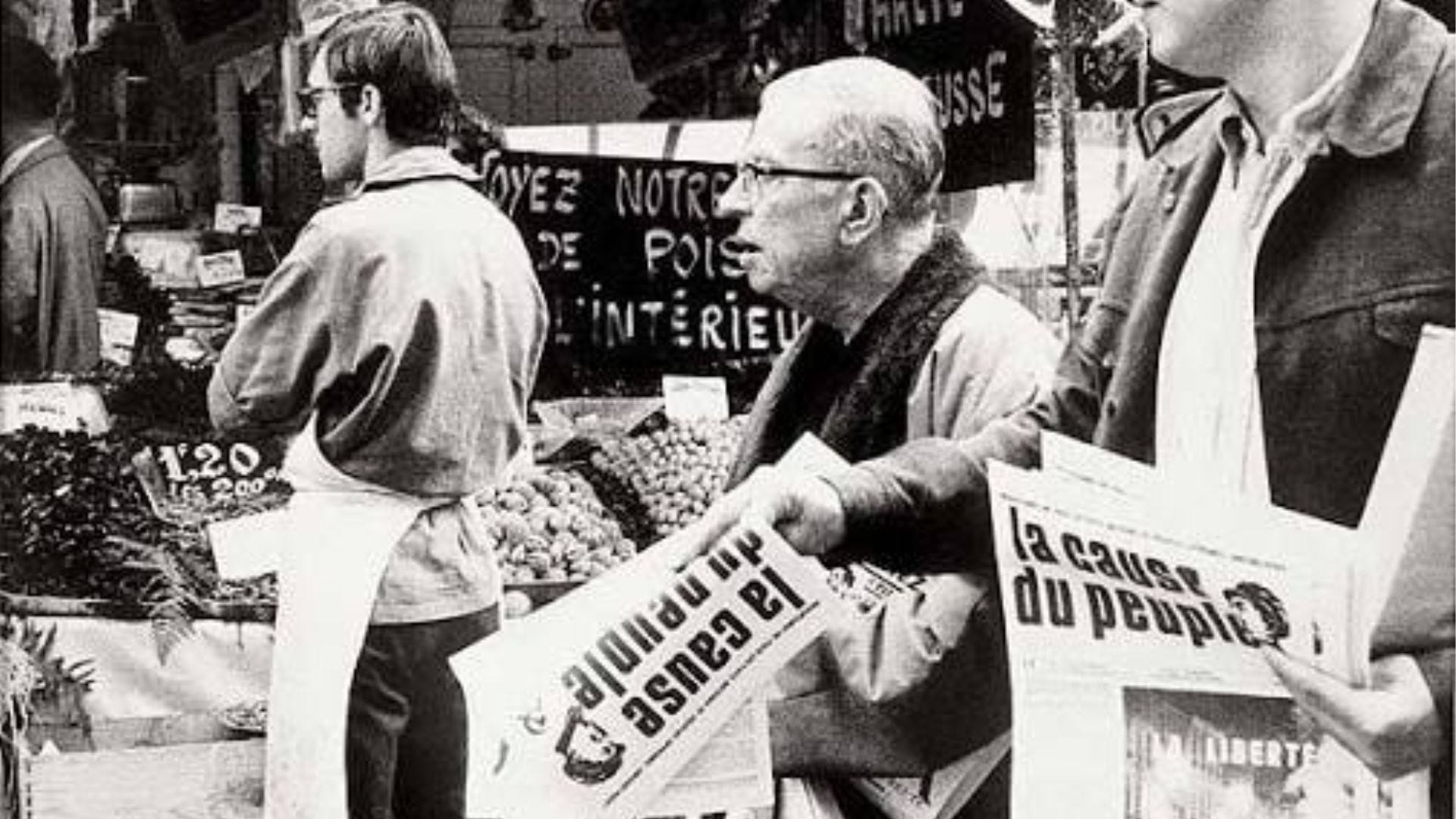
Read Fromm next to this later Sartre, and the irony is difficult to miss. Fromm would have recognised an escape from freedom in what Sartre presented as freedom recovered through the group. And it was with the theory in hand that Sartre could stand on the streets of Paris in 1970, hawking the Maoist newspaper La Cause du Peuple, lending his immense prestige to a doctrine that was at that moment showing China what fraternity-terror meant in practice: students denouncing their professors in struggle sessions before clubbing them to death.
These were not stupid men. Caldwell had a doctorate. Chomsky revolutionised linguistics, yet spent years casting doubt on early reports of Khmer Rouge atrocities, arguing that Western coverage was politically motivated and frequently unreliable.11 Sartre was one of the finest minds Europe produced in the twentieth century, his early work dazzling in its scope and originality. But that same intelligence is what wrote the get-out clause of his later work.
Intelligence offers no natural immunity from terrible ideas, and may even make you more vulnerable to them. Education is a different thing but not an unrelated one: it furnishes you with better arguments, which is not the same as better judgment.
The true believer is not a historical curiosity. You know this already, and any scan of political Twitter shows that our society produces them in abundance, all of them wanting the same things Caldwell wanted: recognition, vindication, the overriding need to belong to something bigger than themselves.
You can see him in the activist for whom gender theology has all the paraphernalia we associate with other cults and religions: doctrines, heresies, excommunications, conversion testimonies. Notice how factual questions are always received as attacks on the self the belief is holding up. She’s there draped in a Palestine flag, waving a genocidal slogan on a police-escorted march through London. For this true believer, Palestine is not merely a bit of geography with a people but an absolute – a totem of everything she believes is righteous, its enemies representing everything that is evil, with the imperialist West once again featuring in that fevered imagination. She’s the direct descendant of Caldwell, but now with a wifi connection. She needs this cause, just like the rest of us need an income.
And remember Hoffer’s interchangeability thesis, because the true believer isn’t confined to the Left. He’s there in the glow of his screen, flitting between Rumble and X, a case study in confirmation bias, seeking out every video clip that confirms every conspiracy theory, every post-truth hot take. He has surrendered his intellect to someone else’s doctrine, with its leader, its vocabulary and its hierarchy of the insufficiently pure – all while feeling cleverer than everyone else for seeing through the lies. There are as many of them as there are marchers for Palestine. They just haven’t yet organised as effectively. And, like his leftist counterpart, he somehow always lands on the Jew in the final analysis. Such is the unique role of the Jew through history, the scapegoat of scapegoats, the enemy to unite enemies. Hating them feels like liberation.
To be clear: the comparison I’m making runs through the believer, not the Pol Pot regime. The point is not that the Free Palestine marcher or the MAGA enthusiast would staff an interrogation centre – but then nobody thought Caldwell would defend one, least of all Caldwell, who was by all accounts a "lovely man". What separates the true believers among them from Caldwell is circumstance, not conviction. Nobody has yet handed them a Year Zero.
But wait a moment, you might be saying. Are these true believers not the most liberated people in history? If the burden of freedom drives people into the arms of movements, the West should be recovering, not relapsing. We have never been richer or safer. We live longer, healthier lives. We have choices that would astonish and bewilder our great-grandparents. Nobody making memes from an air-conditioned Pret is dodging conscription. The man glueing himself to a train will not go hungry, and neither will his audience who lap it all up. If the weight of freedom was the problem, the most coddled generation in history should feel it least.
Instead, fanaticism is a growth industry. Why?
Start with what’s gone missing. Freedom, as Fromm showed us, brings anxiety but also the chance to direct our own lives and make meaning through relationships and productive work. But the structures that once shouldered some of the burden – religion, nation, family, trade, and place – have given way. At one time, you were an individual, but you were also part of a community – an organic one rather than the social media variety. The parish told you what Sunday was for. Your trade told you what you were, and if you were good at it, gave you something to be proud of. You didn’t have to be a believer or a patriot, a tradesman or a dutiful son to benefit. These institutions carried the weight whether you subscribed to them or not, and for those who rejected them, they were still there to define themselves against.
What does that look like now?
Over two or three generations – faster for the young than for anyone else – these institutions have weakened all at once. No tyrant abolished them, no jackboots kicked them to the ground, although an army of sorts marched through them in the name of progress – often in the name of freedom itself. Freedom from oppression. Thus many of the things that once helped people carry the burden of their own liberation disappeared. But the need they served did not disappear with them. People traded the tangible obligations of a real community for an online one, which comes with an entry requirement: the demanding obligations of ideology. Fromm’s atomised self now stands among the remains, and standing there alongside it is someone hawking a newspaper or, more likely, a hashtag and a slogan telling you who you are, what history means and who is to blame.
Comfort creates a different problem. Fukuyama saw it coming at the moment of liberalism’s triumph.12 He warned that people who can no longer struggle for a just cause may struggle against the just cause, that is, struggle for the sake of struggle, “out of a certain boredom”, because they cannot imagine a life without it. We are creatures not long off the plain built for scarcity and danger, thrown quite suddenly into modernity, manufacturing emergencies in order to feel real.
This might explain why so much online disagreement is conducted as apocalyptic melodrama: why misgendering someone is “genocide”, why the Hollywood adaptation of the Odyssey points to “the collapse of Western civilisation”. The stakes must be inflated because nothing in the true believer’s ordinary life supplies them.
The smartphone amplifies all this. We left a man lying in bed at one in the morning, and we can now say more precisely what is happening to him. The TikTok feed is Fromm’s “new dependency and submission” in a portable universe. It does much of his choosing for him, introduces him to his tribe and its attendant enemies. And it supplies that fresh torment unknown to previous generations – an infinite comparison machine that measures his atomised life against the curated triumphs of a billion strangers. Face lit by the screen at one in the morning, he looks for an exit from the terrible burden of his own autonomy.
The effect may be especially powerful among a generation that has been given fewer opportunities to practise bearing uncertainty for themselves. Children whose lives were scheduled to the quarter-hour and supervised to the horizon are bound to find the world more daunting when they face it unsupported. We should not be surprised that people who demand safe spaces on a university campus will demand ideological safe spaces when they go out into the real world.
If you doubt this instinct to surrender, then look at a recent test. In 2020, the question of how to live our lives was abruptly answered for us, and a great many people accepted it without resentment. I’m not talking about epidemiology, which is a different argument. What interests me is what the surrender felt like from the inside. The days took on a radically new shape which quickly became second nature. The rules were set and the same for everyone. Suddenly there was a purpose larger than oneself, and an enemy of sorts in the form of the sceptic, the refusenik, the man in the park without a mask – against whom one’s own compliance could be measured and found virtuous. Here was a domesticated, suburban echo of Sartre's “fraternity-terror” making a brief appearance in the suburbs – a sort of brotherhood of the compliant enforced by the threat of excommunication of anyone who broke ranks.
People banged saucepans in the street at an appointed hour and applauded the dancing nurses and their TikTok routines. But beneath the genuine civic spirit, there was more than a faint obligation to join in. Whole industries of ordinary decision-making were suspended. Millions felt the burden of freedom lift as they joined in the calls to flatten the curve and practise social distancing. Many later described the pandemic lockdowns as the most meaningful period of their lives. That should be the most unsettling sentence in this essay, because it wasn’t just laptop liberals and the work-shy enjoying the confines and dialling Uber Eats between Netflix. It was many of us, perhaps even most of us. The conditions Fromm described were embraced with the fervour of a true believer.
For now, much of the fanaticism we see today remains theatrical, because things are still economically more or less all right – well enough, at any rate, that political violence is mostly the work of the fringe. There are no brownshirts or Mao suits yet13, but the markers are already there, and nobody knows what they will look like in another ten years.
But let the question change from the existential to the practical. Not what is my life for, but where will I live? What will I do for a living if the work I trained for disappears? Add a serious downturn, mass unemployment and some new global crisis, and Fromm’s conditions begin to rhyme with something we’ve seen before: atomised selves, unbearable aloneness, and the movements at the door offering to carry the weight, name the enemy and supply a purpose.
Which is why I keep returning to Caldwell – and to something I saw in Phnom Penh a decade or so ago.
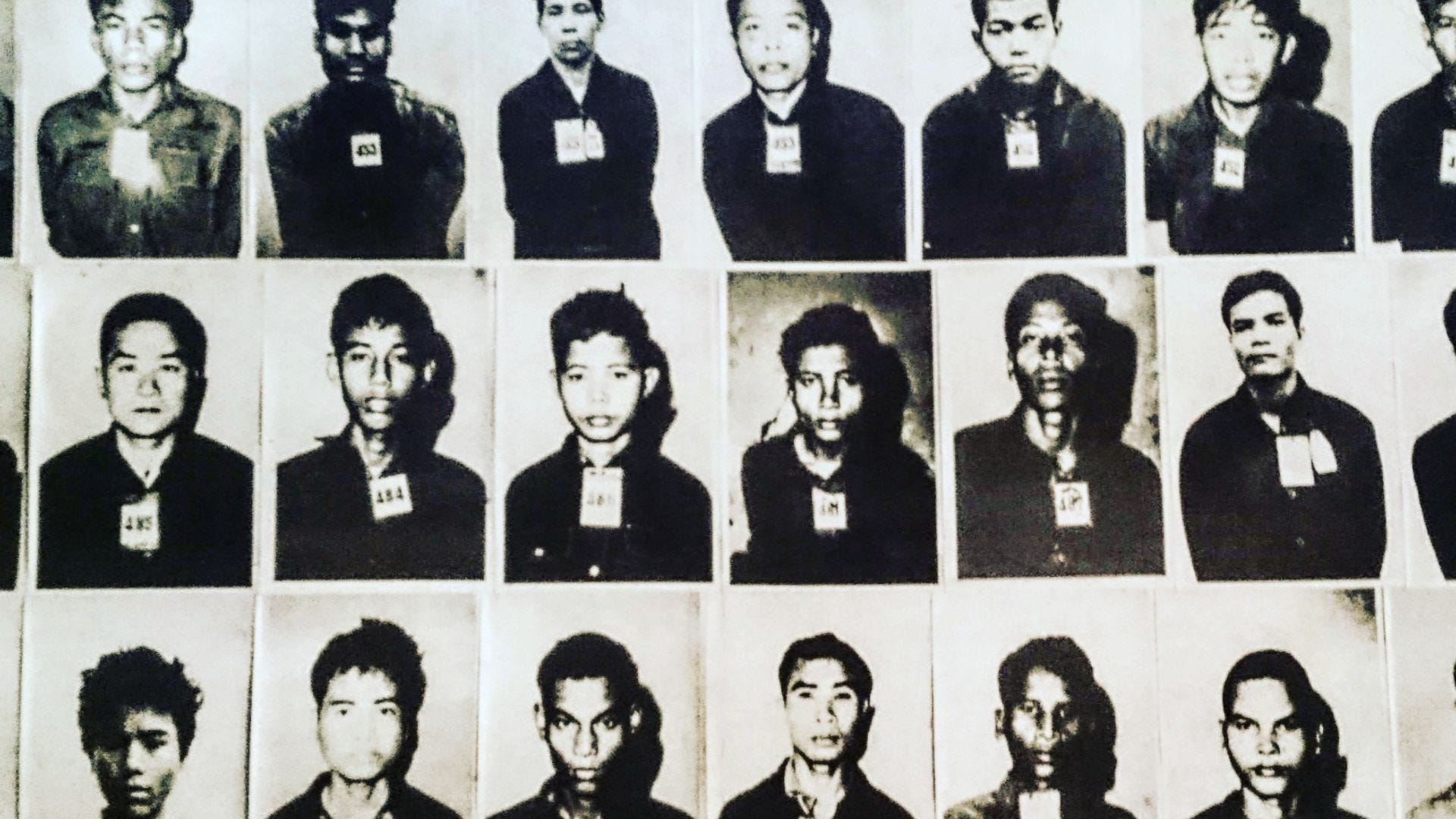
Tuol Sleng, known to the Khmer Rouge as S-21,14 stands in the middle of the city. It had been a high school before the regime converted it into a place for cataloguing, torturing and killing the enemies the revolution required. You see the cabinets of human skulls, the classrooms turned into torture chambers. What sickens you most is the ordinariness that remains: the school still looks like a school. You can picture children sitting beneath the palm trees in the courtyard, doing what teenagers do anywhere, wondering what the future holds, who will love them, who will break their hearts.
The Khmer Rouge photographed everyone who came through, which is why there are walls of faces everywhere. Many were members of the movement itself – cadres, officers and even interrogators from the prison, fed to the revolution as it turned upon itself and photographed on the way in like everyone else. Children among them.
I keep thinking about the look on one of their faces: a young man – a boy really – a number board around his neck, looking into the lens as though he is still waiting for someone to come and explain that he is not meant to be there.

If you’re reading this, you’ve made it to the end of a very long essay. Thanks for taking the time, and a special thanks to paid subscribers, who make this possible.
A note for new readers: I write a long-form philosophical piece like this every few months – they take a lot of time to write and research. You can see a couple of other examples below.
My other articles, especially the dispatches, are more topical, polemical, satirical – and much shorter. I try to get a new piece out every week.
If you’d like to receive more of either, do subscribe. And if you’d like to support the work properly, you can upgrade here.
Please share this essay with someone who’d read it. And do give it a ‘like’ – it really helps The Gadfly grow. Thanks!
You might also like:


Between April 1975 and January 1979, the Khmer Rouge killed an estimated 1.5 to 3 million people – roughly a quarter of Cambodia’s population – through execution, starvation, disease and forced labour.
Elizabeth Becker, When the War Was Over (1986). Becker, then of the Washington Post, was one of only two Western journalists admitted to Democratic Kampuchea in December 1978. The other was Richard Dudman of the St. Louis Post-Dispatch. Caldwell was the third member of the party, invited in a different capacity: as a friend of the revolution.
Andrew Anthony, Lost in Cambodia, The Observer, 10 January 2010 – the source for Walter Easey's and Becker's remarks, Caldwell's Guardian piece citing Hu Nim, and the Ponchaud dismissal. Worth reading in full if this essay has left you wanting the whole story.
Freedom is not, of course, the whole story. Any general theory of political conviction would have to account for economic, social and cultural forces. People join movements for many reasons, some of them perfectly reasonable. My concern here is narrower: the believer whose commitment survives the evidence, and the existential and psychological needs that commitment serves.
Published in America in 1941 as Escape from Freedom and in Britain a year later as The Fear of Freedom.
There is some overlap with Isaiah Berlin’s essay, Two Concepts of Liberty (1958), in which he discusses negative liberty (freedom from interference) and positive liberty (freedom to be one’s own master). The difference is that Fromm feared that negative liberty causes some to flee into movements. Berlin feared positive liberty itself: that “freedom to” becomes somebody else’s theory of your true self, at which point forcing you to comply becomes, in the tyrant’s description of it, liberation.
"Malignant narcissism" is Fromm's own coinage (The Heart of Man, 1964). He applied it to Hitler directly.
Eric Hoffer, The True Believer (1951). Hoffer's first book, written while he was still working the docks, was a favourite of Eisenhower's, which did no harm to its sales.
The line is often attributed to Churchill, but it’s not known if he actually said it – although it sounds like exactly the sort of thing he would say.
Sartre defended the Munich attack in La Cause du Peuple in October 1972, calling terrorism “a terrible weapon but the oppressed poor have no others”.
On 6 June 1977, Noam Chomsky and Edward S. Herman published an article in The Nation that concluded: "We do not pretend to know where the truth lies amidst these sharply conflicting assessments... What filters through to the American public is a seriously distorted version of the evidence available, emphasizing alleged Khmer Rouge atrocities and downplaying or ignoring the crucial U.S. role, direct and indirect, in the torment that Cambodia has suffered." Notice how the not-knowing runs in one direction only.
Francis Fukuyama, The End of History and the Last Man (1992). I quoted the same passage in my essay on postmodernism, which is a companion piece to this one of sorts.
Well, almost nobody. As if on cue, socialist streamer Hasan Piker recently addressed the College Democrats of America in a Zhongshan suit – better known in the West as a Mao suit. Piker had previously called Mao "one of the great leaders of this world", while conceding only that there had been "a lot of fucking excesses". Estimates of the death toll under Mao run from 40 to 80 million.
An estimated 20,000 people passed through S-21 between 1975 and 1979; the museum’s own records document more than 18,000 by name. Perhaps a dozen prisoners are known to have survived.
Brilliant writing. Thank you Frederick
Caldwell to me is an example of being educated to the point of becoming stupid. It describes much of what constitutes the so called intellectual class. In my not so humble opinion.