

How Liberalism Got Hacked by Victimism
Why decent societies are so easy to game – from every side.

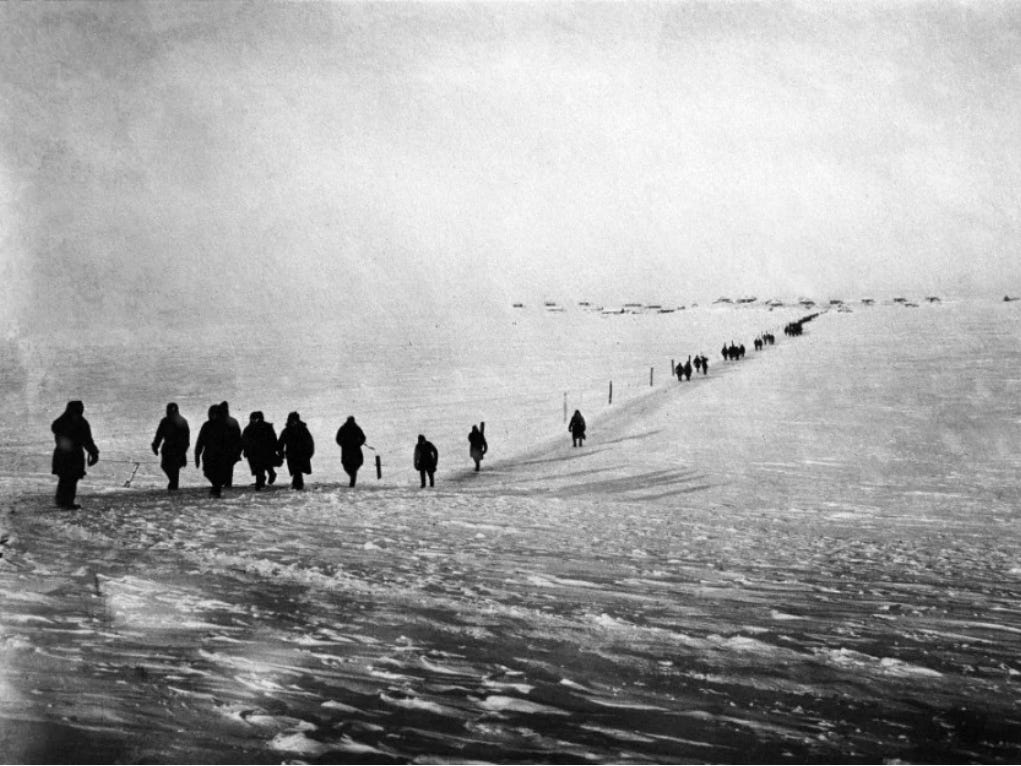
The Soviet Gulag was one of the cruellest inventions in human history. Like the concentration camps of Nazi Germany, it attracted its share of sadists. One notorious punishment was to tie naked prisoners to a tree and leave them to the mosquitoes, which swarmed the camps in the summer months.1 At best, prisoners were treated as disposable economic units for the Soviet state. At worst, they were playthings of guards who killed them for their sport.2 In every case, the Gulag was designed to strip human beings of their dignity. Into that hell were thrown dissidents and ordinary citizens, poets and peasants. Among those who came out the other side was Aleksandr Solzhenitsyn.
The astonishing thing about Solzhenitsyn is that he refused to define himself by the horrors of the camps. “Bless you, prison, for having been in my life,” he wrote in the book that made the Gulag famous worldwide.3 It’s a sentiment almost impossible to comprehend except, perhaps, as a way of making peace with injustice rather than being destroyed by it. Solzhenitsyn turned his experience into testimony. He never traded on his suffering, nor asked to be excused from ordinary judgment because of it. He simply bore witness to staggering human cruelty, showing us the worst of humanity, but also, through those who endured it, the best.
There are millions today suffering at the hands of others. From Christians in Nigeria to the women and girls of Afghanistan, these are people who know the real meaning of victimhood in a way few of us do. In 2012, Malala Yousafzai was shot in the head by the Taliban for insisting that all girls have a right to education. She went on to campaign publicly, and at continued risk – a response so alien to our own moment that it almost sounds eccentric. Partly this is because we can’t imagine living under those conditions, but it’s also that we’ve grown used to a different response to suffering. Ours is a culture that incentivises taking a wound – sometimes real, often inflated – and placing it at the centre of our identities. If you’ve opened a newspaper today or scrolled social media, you’ve already seen countless examples: personal injuries displayed like medals, worn with defiant pride, and daring you to contradict the claim.
Philosopher Pascal Bruckner calls this victimisme (victimism): suffering converted from something to be overcome into a source of status, moral authority and power.4 We’re all victims of something because to live in this world is to suffer indignity and face injuries, real and imagined. Think back to the school bully, the neglectful teacher, or the boss who humiliated you in front of your peers. What if you could make these injuries into instruments within a moral system of blame? What if, rather than overcoming these injuries, you turned them into symbols of virtue and moral authority? Those who play this game and profit by it, Bruckner calls “victim entrepreneurs”.
None of which is to say that compassion is the problem per se, nor that victimhood is imaginary. One doesn’t have to endure the Gulag to be a victim. People are bullied, neglected, humiliated and destroyed in all sorts of ways that decent societies are morally obliged to notice – and decent people do notice. When someone in obvious distress tells you he’s been badly hurt, most of us are inclined to believe him and act on it, unless we have very good reason not to, or we’ve been conditioned out of it. The question is not whether suffering exists. It plainly does. The question is what happens when victimhood becomes the most reliable route to authority.
Here’s where liberalism comes in. Compassion wasn’t something added to liberal ideology by sixties hippies doing peace signs. It was there at its roots. Montaigne, writing in 1580, well before liberalism had a name, wrote that among all other vices “there is none I hate more than cruelty, both by nature and judgment, as the extremest of all vices”. Or take Adam Smith, the supposed paragon of self-interest, who established himself first as a moral philosopher, arguing that our moral ideas and actions are rooted in sympathy for others. Centuries later, philosopher Judith Shklar built an entire liberalism on that instinct, one that begins not with a vision of the highest good, but with the rejection of the worst evil.5 Do not start by deciding what the perfect society looks like, she argued. People who do that tend to build camps. Start instead by naming what no decent society may do. And the first thing it may not do is be cruel.
This is very much the liberal inheritance we recognise today, one that exists, before anything else, to shield the vulnerable from cruelty and arbitrary power. None of it will be news to the modern “liberal” in the American sense, who makes this the foundation of their politics. But hold the classical version in mind, because it goes far beyond shielding the sensitive from microaggressions. The classical liberalism of Locke and Mill is about protecting individual freedom from state tyranny – something the right would sign up to as hurriedly as the left signed up to compassion, but they are hardly unrelated. And it is these liberal virtues – compassion above all, and the regard for human dignity – that let victimism in through the back door.
Nietzsche put this down to a master-slave morality, in which the masters embodied all that was good: vitality, pride, and the capacity for action. Or, more precisely, the good was everything they embodied. What was bad was simply everything they were not. But because the weak couldn’t compete on these terms, they inverted the whole structure. Slave morality begins not with affirmation but with ressentiment, and takes its revenge where the weak can actually win: in the realm of values. Now the master’s qualities are reimagined as evil, while the qualities exalted are precisely those the powerless happen to possess: meekness, humility, pity, the turning of the other cheek. Powerlessness gets relabelled as virtue, and suffering becomes meaningful. It’s significant that slave morality cannot affirm itself directly; it needs monsters against which to define itself.
Nietzsche saw Christianity as the great historical triumph of this inversion, but there’s a modern version he couldn’t have imagined: slave morality running most freely among the safest, richest, and most insulated people who have ever lived. Their resentments are turned into policy by a diversity consultant drafting corporate speech codes from a corner office overlooking Central Park. Codes that begin in universities now filter out into every public institution in the land. There’s a multi-billion-dollar industry built on it.6
Liberalism has inherited and universalised something from the slave-morality lineage: concern for the weak and the dignity of the individual. But liberalism organised around the prevention of cruelty has to take all suffering seriously, from claims of systemic injustice to the colleague who “felt unsafe” after someone complimented her haircut. Once a society agrees that injury confers moral authority, it has created a currency. And currency invites counterfeiters.