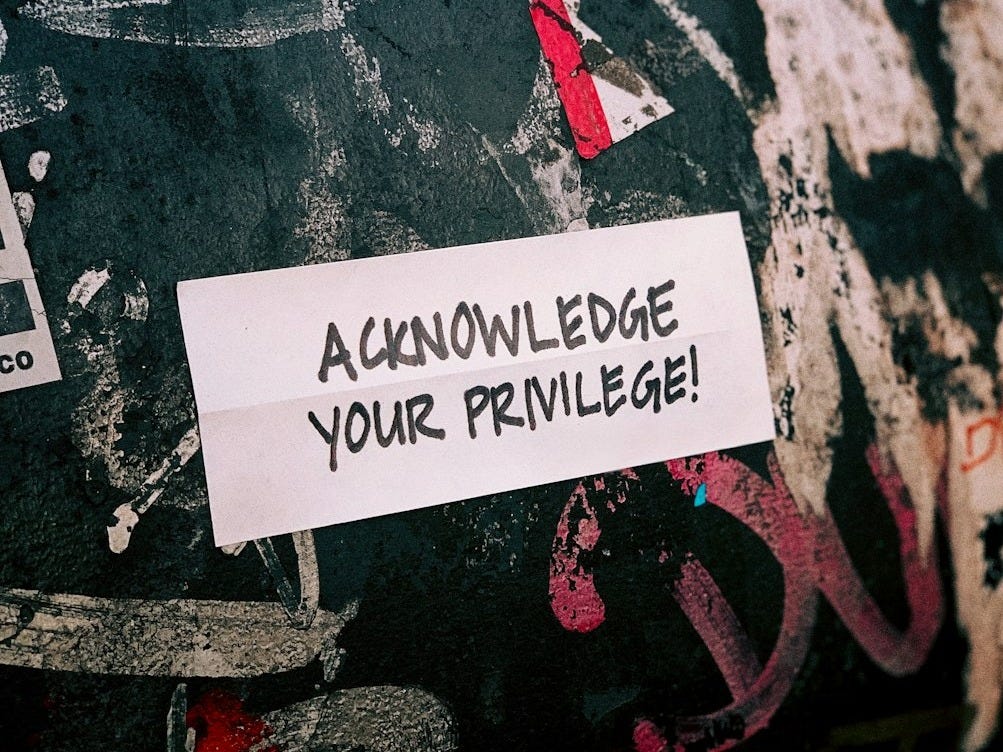
The DEI Phrasebook – Decoded
10 phrases that reveal institutional surrender to progressive orthodoxy.
The Diversity, Equity and Inclusion (DEI) bomb finally detonated around 2020. It had been years, maybe even decades, in the making – assembled inside the academy and then refined in institutions already steeped in the language of political correctness. It just needed a perfectly calibrated trigger.
The trigger, as it turned out, was George Floyd, whose death amid the strange, highly charged atmosphere of COVID lockdowns turned us all into spectators of a moral panic. Millions sat at home glued to their smartphones as the madness of crowds played out on social media with endless footage of “largely peaceful protests”, statues tumbling and politicians taking the knee.
Then came the turn of corporations. In the months that followed, performative statements flooded LinkedIn, diversity officers were hired by the thousand, and hashtags begged for attention in every thread and feed.
It’s tempting to look back on those events as if they were a curious aberration, a moment of hysteria brought about by lockdown cabin fever. Today, it’s common to hear that “woke is dead” – and it's true that many DEI programmes have been shut down or rebranded. The finger-wagging sanctimony has been toned down a few notches, too.
But what remains is the language: a distinct and unmistakable lexicon with a long half-life. This is the fallout from a blast we thought was long behind us. DEI no longer marches through institutions with a fanfare, but it operates as background radiation. Wave the Geiger counter over policy small print or the latest HR initiative, and you’ll hear the familiar crackling of progressive orthodoxy.
The language has insinuated itself into corporations and public bodies across the Western world, becoming almost invisible through constant repetition. Phrases that sound benign on the surface mask a cold system of enforcement that continues to reward fluency in Newspeak while punishing dissent. Taken together, they form a closed moral system – one that begins with empathy and ends with coercion.
Here are a few phrases you’ve probably heard before.
1. “We’re on a journey”
The world’s most overused corporate metaphor is also a favourite of institutions haemorrhaging money on failed DEI initiatives. Bud Light went on a journey with transgender influencer Dylan Mulvaney in April 2023 and ended up in corporate hell. The brand lost its spot as America’s top-selling beer, two marketing executives were put on leave, and the whole debacle cost a billion dollars in lost sales.
The BBC has been on a journey since around 1997 at the expense of licence-fee payers. It doesn’t seem to know quite where it’s going, but it keeps taking a left turn, often detouring into fashionable gender politics. The journey has also led it to stories that align with Hamas narratives. Despite the costs to its reputation, the BBC remains convinced the destination is an important one (whatever that may be) and that the journey mustn’t stop until the end, which will come eventually and mercifully for all involved.
2. “Bringing your whole self to work”
Silicon Valley invented this one. The idea was that workers would bring their creativity and passion to the job. Instead, they brought their politics and personal grievances.
It turns out there’s only really a problem if your “whole self” doesn’t align with “correct thinking”. Don’t bring your whole Christian self to work – the one who opposes abortion or thinks polygamy is a bad idea. That won’t go down too well. Think national borders might be a good thing? That whole self had better stay away, too. A gender-critical whole self? Don’t be silly. Best put all those whole selves back in their box, or wave your career goodbye.
You might remember Google’s James Damore. He brought his whole self to work – specifically, the part interested in evolutionary psychology. He was fired within days for “perpetuating gender stereotypes” after writing a memo about biological differences in career preferences. The memo claimed Google operated as an ideological echo chamber intolerant of dissenting views. His firing proved him right.
3. “Brave conversations”
Have you had a brave conversation recently? Maybe following a cancer diagnosis or after explaining to your husband why you’re leaving him. We’re not talking about any of that. We’re talking about “courageous dialogue” with your line manager following an apparent “microaggression”. Turns out you need more training in how to think and when to declare your pronouns.
These conversations tend to begin with an admission of privilege, followed by an acknowledgement of harm, and conclude with a commitment to growth. Actual conversation – the kind where people disagree and minds change – never happens. That’s the wrong sort of bravery. The proper kind is where you confess to thought crimes you didn’t know existed.
4. “Educate yourself”
You’ve probably come across this rebuke in a comment section at some point. Perhaps it was directed at you after saying “all lives matter” in what you thought was a noble, unifying sentiment we can all agree upon. Educate yourself.
This is a phrase professional activists and scolds deploy when they can’t defend their position. It’s the go-to for transforming intellectual laziness into moral superiority.
What “educate yourself” really means is this: read the approved texts so as to arrive at the conclusions I agree with – what we used to call indoctrination. Any other outcome is seen as proof of moral and intellectual deficiency.
Real education, of course, involves weighing evidence, considering counter-arguments, and risking being wrong, which is why the progressive ideologues hate it.
5. “Psychological safety”
Google popularised this phrase, which made its way into every workplace in Silicon Valley and beyond. “Psychological safety” was meant to encourage an environment where people can take risks and make mistakes without fear. That was a nice idea while it lasted.
Today, it means an environment where nobody can disagree with progressive orthodoxy without being invited to an HR struggle session. The safest spaces, it turns out, are wherever difficult questions are never asked. Feeling “unsafe” is now what happens when we challenge someone’s views on immigration or question whether men can become pregnant. JK Rowling has spent years being told her defence of women’s spaces makes trans people “unsafe”.
6. “Lived experience”
This one refuses to die, which is a tragedy because few ideas on this list have wrought so much chaos and misery as the idea of “lived experience”. A phrase that transforms subjective feelings into unassailable truth, lived experience is invoked again and again to shut down “problematic” questions like “why are you trialling experimental puberty blockers on children as young as 10?”
This is how clinicians at Tavistock were silenced when they raised concerns about rushing children into medical transition. They were told they were “invalidating young people’s lived experience” of gender identity. Evidence-based medicine lost to feelings-based ideology. The Cass Review finally reintroduced rigour, but only after a decade of children used as test subjects.
Or consider Iranian women protesting forced veiling. Western feminists have dismissed them while deferring to the “lived experience” of those women who defend the hijab as empowerment. When evidence becomes inconvenient, personal testimony is invoked as epistemological authority, leaving empirical reasoning nowhere to go.
7. “Equity, not equality”
Equity used to refer to the value of shares issued by a company. Now it refers to equalising outcomes rather than opportunities. The switch transformed Martin Luther King’s dream into its nightmare opposite.
When black students underperform in maths, an equality-based approach would demand better teaching, more resources, and higher expectations. Equity, on the other hand, means eliminating advanced maths classes because they produce unequal outcomes.
San Francisco tried this in 2014, pushing all Algebra I to ninth grade. The results were less than impressive. After a decade of this “equity” experiment, the district finally admitted failure in 2024 and reversed course.
Equity drags merit down rather than lifting anyone up. The data keeps proving it, but the language of equity persists.
8. “Decolonising the curriculum”
Widening a reading list, adding non-Western voices, and teaching the history of empire – who could object to this at a university? It sounds like intellectual curiosity, the kind universities are meant to encourage. If only.
“Decolonising the curriculum” is largely about treating Western knowledge as inherently suspect because it’s Western. Ideas are judged not by whether they’re true but in terms of their provenance. Plato or Locke are “problematised” rather than argued with. Rejecting classical liberal principles in favour of progressive ones is “challenging power”.
In short, “decolonising the curriculum” is a licence to swap scholarship for grievance. It tells students what they’re meant to feel about the civilisation that built the university they’re attending.
9. “Be an ally”
Allyship used to mean supporting a cause. Now it means performing endless penance for demographic characteristics you can’t change. The progressive ally must publicly confess privilege, declare solidarity, and accept instruction from activists without question.
Being an ally requires constant demonstration. Silence, lest you forget, is violence. But so is speaking without being asked. And whatever you do, don’t “centre yourself” – except when confessing your privilege in a listening circle, which must be done regularly and with feeling.
Performative allyship of this kind is loud, easy and status-enhancing – which is why useful idiots prefer it. Real solidarity often demands moral courage. It’s Karoline Preisler, the German activist and politician, standing alone at demonstrations in front of a baying mob with a sign saying “rape is not resistance”.
10. “Impact over intent”
A lesser-known phrase, these words ensure your guilt is inescapable. It doesn’t matter what your intentions are; only how others feel about your actions. What’s that you say? You meant no harm? Irrelevant. Someone felt harmed, and that’s all that counts.
It’s a phrase that inverts centuries of moral reasoning. In law, intent is the difference between murder and manslaughter. In ethics, it separates malice from mistake. But in DEI theology, intent is dismissed as a privileged evasion. The subjective feelings of the aggrieved become the objective truth (see “lived experience”).
This is how accidents become offences, misunderstandings become attacks, and practically anything becomes “Islamophobia”. Impact over intent means you’ve done something bad. You just don’t know it yet.
Why the language of DEI persists
On the surface, these phrases sound reasonable – even virtuous. They invoke values that all decent people share, such as tolerance and fairness. But underneath lies a simple transaction designed by activists and backed by reputational threats: do what we say or we’ll call you names on social media. We might even call the police.
Institutions and corporations cave to this intimidation or even submit willingly – many of them are run by the activists, after all. They then make a song and dance about “learning lessons” and put a rainbow flag in the corporate bio (not in the Middle East, mind).
While all this is going on, the most privileged among the new cohort of employees – the privately educated and well-connected – simply learn to adapt. Specifically, they learn the progressive lexicon and correct shibboleths.
The working class, meanwhile, gets locked out – first by not having access to the new speech codes and then by holding unfashionable views that their jobs depend on suppressing.
It’s been half a decade since the Black Lives Matter protests. The embarrassing scenes of European politicians taking the knee for a man killed in police custody in Minnesota seem distant. Political discourse has grown tired of “social justice” and the attendant hypocrisy. Corporations have disbanded DEI teams, and “woke” has become a pejorative.
But much of the language persists because the people who use it pay no price for the harm it causes. HR directors still have jobs and diversity consultants still bill by the hour. The costs are absorbed by those with the least ability to navigate the new moral codes.
A decade from now, these phrases will sound dated, and eventually they’ll fade away. But others will take their place – a vocabulary already incubating in universities and carrying the same assumptions.
This is how ideology colonises institutions in a post-religious age: through a moral language that redefines virtue, reshapes norms, and renders dissent unspeakable long before it becomes the object of cancellation.
You might also like:


Which phrases did I miss?
Here’s a link to Orwell’s 'Politics and the English Language', which remains the essential guide to how language is used to corrupt thought:
https://www.orwellfoundation.com/the-orwell-foundation/orwell/essays-and-other-works/politics-and-the-english-language/
I would say you get it. And whenever anyone uses one of those phrases in my company, watch me walk away.