
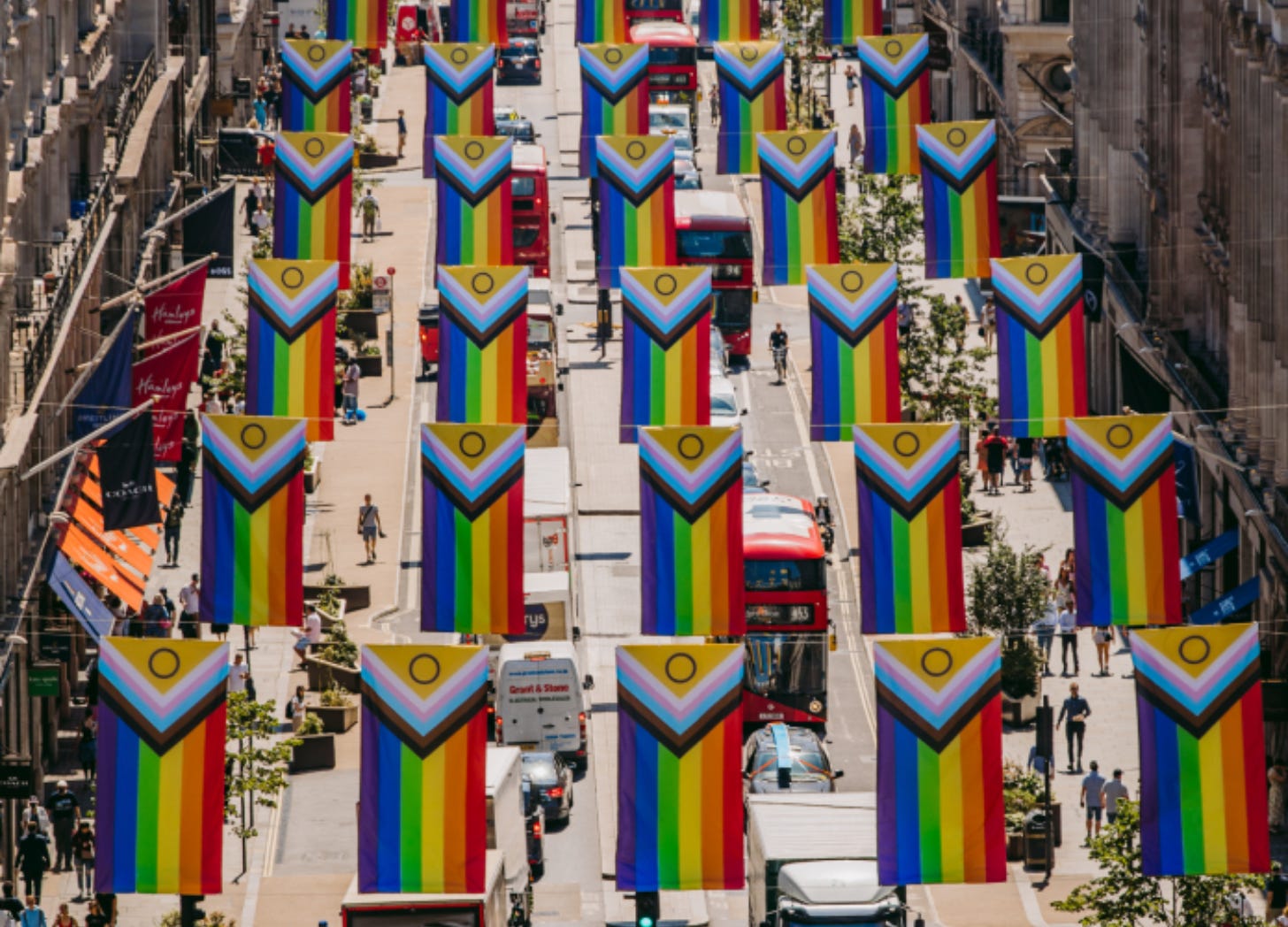
Everyone’s bored to death with it. Not just the silly pronouns and bullying sanctimony, the institutional groupthink and endless propaganda. Not even the corporations playing pretend with rainbow flags on one account while flogging cars to regimes that stone homosexuals on another. No, I mean the word itself. The soul-emptying clichés on the left and tired banalities on the right. “Diversity is strength”, says one side in a transparent lie. “Go woke, go broke”, says the backlash, ignoring that Diversity, Equity and Inclusion (DEI) is a multibillion-dollar industry.
This boredom fuels declarations of victory. Piers Morgan’s new book, Woke is Dead, claims that common sense has triumphed “in an age of total madness”.
Don’t be silly. Far from being defeated, woke is adapting. This virulent ideology has learned something crucial: when explicit commitments attract backlash, you make them implicit. When the branding becomes toxic, you rebrand. And when diversity quotas spark lawsuits, you rename them “holistic assessments”. In short, when ideology becomes indefensible, you embed it deeper into the small print where it’s harder to see and impossible to challenge.
The signs are still there, of course. Walk into any NHS hospital and you’ll still see leaflets about “chest-feeding” and “pregnant people”. Check university admissions and you’ll notice that Oxford accepts black applicants at three times the rate of grade failure compared to white British students. But it’s a little less obvious than before, because the public is more aware of what’s going on and less willing to let it pass unnoticed.
The result is that institutions, far from abandoning woke, have started to camouflage it. They’ve given it witness protection.
How institutional witness protection works
In February 2024, the University of Oklahoma announced it was eliminating its Division of Diversity, Equity and Inclusion after Governor Kevin Stitt signed an executive order banning DEI offices. Conservative outlets celebrated. Another domino had fallen. There was just one problem. The university had not done anything of the sort.
Buried in the same announcement is a subtle but unmistakable sleight of hand. The division, we learn, would “change its function and name to the Division of Access and Opportunity”. Staff were being reassigned to “new roles”. President Joseph Harroz assured everyone the new division would “continue to ensure that the University of Oklahoma is a place of belonging for all.”
Three words changed in the title; everything else stayed the same. The pattern repeats everywhere we look.
In 2024, Walmart dropped “DEI” from corporate materials but kept its Chief Diversity Officer – sorry, Chief Belonging Officer. Kentucky closed its Office for Institutional Diversity but shifted those units to a new Office for Community Relations, with President Eli Capilouto promising “no jobs would be lost”. Tennessee’s Division of Diversity became the Division of Access. Louisiana State changed Inclusion to Engagement.
Why protection works
Institutional witness protection succeeds because the people running these organisations still believe in the ideology they’re supposedly abandoning. They haven’t had revelations about merit or truth. They’ve learned that explicit commitment now carries a social cost. So they’ve made a calculation, namely, keep the substance of DEI but change the language.
This requires three conditions, all of which are present.
First, the protected ideology must be ingrained deeply enough that removing it would require serious upheaval. DEI is woven into hiring practices, admissions criteria, performance reviews and everything in between. Extracting it would mean auditing every system, rewriting every policy, and retraining every manager. It’s the kind of exhausting but essential work that most administrators wouldn’t touch.
Second, the ideology must retain true believers in positions of power. The majority of university presidents, HR directors, and civil service managers actually believe in this stuff. Much of it originated with them. It’s a mistake to think they are cynically enforcing rules they privately reject. When forced to rebrand, they do so to preserve what they see as moral progress against reactionary backlash. And to save their jobs.
Third, critics must be sufficiently weak or distracted that symbolic concessions satisfy them. This might call for a name change, a bit of reshuffling, and a promise to “refocus” priorities. Most people will accept the announcement and move on, lacking the time or energy to verify whether anything substantive has actually changed.
Ideological capture of institutions is a deeper problem for Britain than America because organised resistance barely exists. True, the LGBTQ rights charity Stonewall weakened its grip after Kathleen Stock’s persecution at Sussex. The BBC and government departments ended participation in the Diversity Champions Programme. But Stonewall adapted, becoming less visible while maintaining relationships with hundreds of organisations still implementing its policies. The BBC pledges to “hardwire diversity into everything we do”, except diversity of thought. Britain’s largest police force spends £5.2 million a year on diversity initiatives.
Meanwhile, America has Republican governors actively dismantling DEI through legislation. Groups like the Manhattan Institute fund litigation against universities implementing racial preferences. Britain has grumbling op-eds and GB News segments, but almost no organised resistance with actual power.
The UK Conservative government spent 14 years pretending to be conservative while overseeing a cultural revolution that began with Blair in 1997. Labour, now back in power, has picked up the reins and is galloping at full speed.
When grooming gangs in Rotherham and Rochdale preyed on girls for years, officials looked away for fear of being called racist. When the headteacher at Axel Rudakubana’s school described his behaviour as “sinister”, social workers pressured her to change the word – they thought she was “racially profiling him”. Three little girls died at a Taylor Swift dance class in Southport.
Ask British Jews whether woke is over.
The evolutionary precedent
Successful ideologies survive by updating their presentation while protecting core commitments. When original branding attracts criticism, they find new language that makes those same commitments more palatable.
The collapse of the Soviet Union should have made Marxist ideas irreversibly toxic – embarrassing to declare attachment to in polite company. The ruined economies, millions dead, and entire populations imprisoned. No sensible, educated person could subscribe to such historical failure.
But Marxism didn’t disappear. It evolved into critical theory. Watch how it invokes the same critique of capitalism and power structures, the same analysis of oppression, and the same vision of radical equality. But now the vocabulary shifted from “class struggle” to “systemic oppression”, from “bourgeoisie” to “privileged groups”, and from “proletariat” to “marginalised communities”.
Woke follows this evolutionary path with cold discipline. The radicals of the 1960s lost many of the immediate culture-war battles but won the institutional war by embedding their ideology in universities, from which it spread across decades. Woke, itself an inheritance of that movement, uses the same strategy. The long march through the institutions may proceed under a more colourful banner, but the ideas are essentially the same.
Not dead, relocated
Morgan’s book and similar declarations of woke’s demise allow exhausted conservatives to believe the fight is over. It feels like a victory, but they’ve merely let institutions claim they’ve responded to criticism while changing nothing substantial.
The backlash was loud and inevitable, but as it subsides, it will become clear that this was a pyrrhic victory, drawing a new cohort of idealistic and maladjusted youth to the woke cause, now with a different name and branding.
Woke isn’t dead. It’s in witness protection, with a new identity and a new location. But underneath is the same person with the same ideological certainties as before. Institutions have learned to survive backlash through tactical sophistication. The loud activists have been useful idiots, gliding between one cause and another like clowns in a travelling circus, while the serious work happened backstage.
“Woke” may be falling out of favour, but the ideology isn’t going anywhere.
You might also like:


Excellent. Woke or whatever name it has is inherently authoritarian. Not the soft, cuddly #BeKind movement it claims to be, and many seem to think it is. The battle for truth and freedom goes on.
Without a coherent countervailing social / economic / political movement against this modern “wokey” Marxism it will continue to pervade all aspects of Western nations. And unfortunately “Trumpism” lacks coherence, breadth and depth and will likely fade away after 2028, with a serious risk of leaving the reins of power to the hands of the Marxists.