
“Men are born ignorant, not stupid; they are made stupid by education.” – Bertrand Russell
One of the great stupidities of the British state today, though we see the same across much of the West, is that it has conflated race with culture. This would ordinarily be called a category error, although that makes it sound like a miscalculation rather than what it is: a useful dogma that the managerial class can hide its failures behind. We call it multiculturalism.
Many hear that word and conjure up a society where cultures intermingle happily and enrich the whole. “Look at the wonderful festivals and cuisines”, they say. “Chicken tikka masala is your national dish now. Isn’t it wonderful how multiculturalism has saved the native British from the distress of eating their own food?”
Sure, okay. I mean, I love Indian food. I would take it over fish and chips any day of the week except Sundays, when I opt for Chinese. I’m fine with festivals, too. I’ll pass on Notting Hill Carnival because it’s a little “vibrant” for my taste, but I’m happy for others to parade through London and celebrate their cultures.
None of those things is multiculturalism in the sense I’m talking about in this essay. The cuisine and mixed marriages, the freedom to practise your religion within the law, everybody rubbing along – that’s the soft version of multiculturalism, and almost nobody objects to that. I certainly don’t.
I’m talking about the hard version of multiculturalism, the one written into state policy. It’s the doctrine that says the state should treat some groups differently rather than expect them to assimilate into a shared civic culture. It says, in effect, that the liberal principles which are the bedrock of the free and open societies we enjoy in the West must adapt to imported customs, even when those customs conflict with those same principles. It’s the multiculturalism that defers to “community leaders” and treads on eggshells every time it asks a group to adapt a bit to British norms, maybe rein in the cousin marriage stuff, that sort of thing. It’s the sort of multiculturalism that has critics talking about “failures to assimilate” and “integration problems”. That’s the version I’m talking about in this essay.
And let’s be honest about what “integration problems” really mean. We’re not usually referring to Poles or Nigerian Christians. Nobody seriously worries that the Hong Kong diaspora will refuse to adapt to liberal norms or demand that the local supermarkets stock dim sum.
We’re talking about Islam, and specifically the cultures around some of its more conservative interpretations. Many Muslims integrate perfectly well, of course, and that matters. Where things go wrong is in the immovable religious injunctions that treat secular law, female equality and free expression as problems to be managed rather than rights to be upheld. Conservative Muslim men are not taking their cues from On Liberty but the Koran, and the two sets of ideas, liberalism and literalist Islam, are (shall we say) pulling in opposite directions – the latter producing men who regard women as property and, as we are all too aware today, view girls outside the group as fair game.
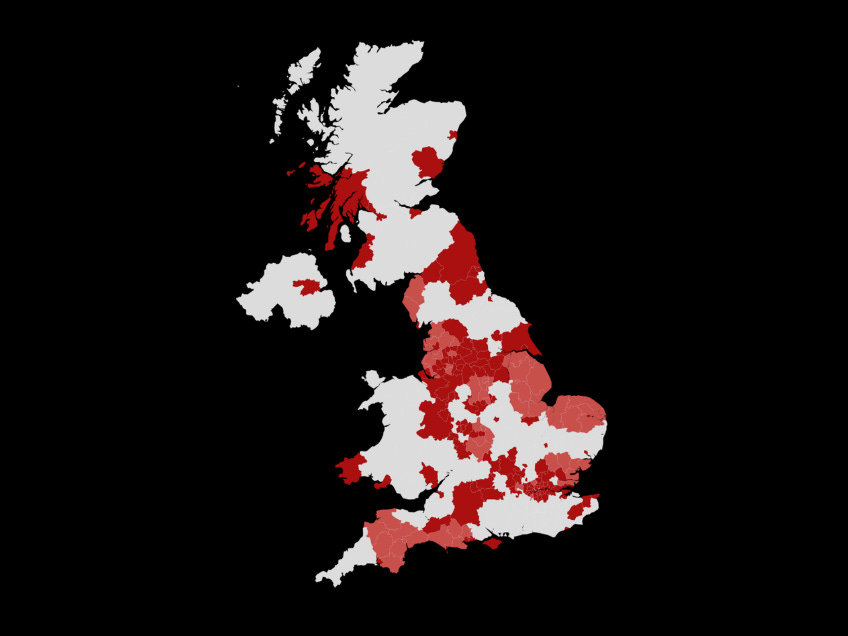
This week saw the release of the Rape Gang Inquiry report1. You already know about this unless you’ve landed on this post by accident and have paid no attention to one of the darkest episodes in modern British life.
The report describes how, for decades, organised networks of overwhelmingly Pakistani-heritage men abused and exploited working-class girls, many of them children, across towns and cities in the UK. We already know the rest: that the police, social workers and media looked away for years, and that even when Elon Musk dragged the scandal into the global spotlight, the government's first instinct was to resist – voting down a national inquiry before grudgingly conceding one much later. The sentient filing cabinet that is Keir Starmer previously accused critics of “jumping on a bandwagon” and “amplifying what the far-right is saying” – because that’s simply the script he pulled from the shelf, one written down long before he came into power.
We also know that the children who reported what had happened to them were treated as the problem; that those whose first duty should have been to listen to these children and care for them instead treated them with suspicion and even contempt. Why? Because they were terrified, above all, of looking racist.
Just think about what that means for a moment. The organised abuse of white English working-class girls mattered less in their moral calculations than the perception of racism. Not actual racism, which is stupid and wicked, but “racism” in the sense a bureaucrat uses it, which amounts to: please stop noticing patterns because your noticing is creating paperwork and I might lose my job if we make a fuss about it.
The governing class understands all this well enough, which is why it puts so much emphasis on crisis management and on holding a tight rein on the mainstream media – not that the latter need much restraining. This is just another institution staffed by the same university cohort that was taught Britishness is somehow morally defective, that it must pay for colonial sins and the rest. Even Britain's feminists, who can detect patriarchy in a manspread, fell silent.
All of them understand the difference between attacking people for their skin colour and criticising ideas, customs and practices. They simply discovered that conflating the two categories was useful, because it made awkward questions easier to dismiss and dissent easier to pathologise. It also preserved their self-image as moral sophisticates, which is why they return to the slogans again and again, like a dog proudly returning to its vomit. The rest of us, meanwhile, see a poisonous mess in urgent need of clearing up, although few have wanted to say so out loud.
Decades of nudge tactics and propaganda have trained the public to respond in very particular ways to questions of race. People learned to self-censor because the charge of racism became the second-worst thing you could be called after paedophile – unless, of course, the paedophiles belong to a protected group, in which case mentioning it is “divisive”. We learned that noticing patterns was the sort of thing the “far-right” do, so we pretended not to see them, or at least not to mention them in polite company.
Who can blame anyone for avoiding these discussions when speaking up costs them their reputation or even their job? And what if going along with it has the opposite effect: a promotion, a status bump, the applause of a handpicked BBC audience? This is the kind of social engineering that has been operating on the general public for two decades or more.
It was Times reporter Andrew Norfolk who, in 2011, broke the "conspiracy of silence" over the abuse of vulnerable girls by organised groups of men. The man who exposed it was promptly accused of racism and received death threats, which tells you everything about what he was up against2. His investigations eventually forced an inquiry, but only after the state had switched on the fog machine at full blast. It’s why we kept hearing about “Asian men”, a group so broad it could mean anyone from Istanbul to Tokyo. The people who could distinguish between 72 genders suddenly couldn't identify a relevant subculture, for the same reason others looked away from the girls who needed protecting: the fear of seeming racist.
But culture is not race. This is not a difficult concept, and a child can understand it. Indeed, it takes a certain kind of education to make people stupid on this point, and perhaps it should not surprise us that the most educated societies on earth have produced managerial classes so obsessed with race and gender that they seem to need to renegotiate terms with reality itself.
For everyone else, not bamboozled by tertiary-level groupthink, the difference between race and culture is clear enough: one is inherited, the other is learned. Skin colour by itself tells us nothing about what someone believes, any more than eye colour does. Culture, on the other hand, can tell you quite a lot, especially on questions related to the treatment of women, whether daughters are protected or policed, attitudes to religious dissent, and the moral status granted to girls outside the group.
White girls, for instance.
That is the category error that has now become a rape statistic. The girls who should have been protected by the state – and what other duty could come before protecting its own children? – were treated as an inconvenience instead. Their suffering pointed to a pattern the state had decided not to see, because scrutinising cultural practices had been ruled a form of bigotry. The liberal state, having substituted multicultural values for liberal ones, decided that clarity was more dangerous than abuse.
There is another layer to all this that rarely gets mentioned, and which complicates the simple narrative around Islam. As the commentator Richard North argued recently3, many of the grooming gangs appear to have operated within criminal networks underpinned by the biradari (meaning brotherhood), a clan-based kinship system from Pakistani Kashmir that predates the arrival of Islam in the region by centuries. There is very little online about British biradari culture, except, ironically, a BBC article from 2015 that describes how clan politics emerged in Bradford, home to one of Britain’s largest Muslim communities4. Arrivals to Britain from Pakistan in the 1950s sought out those among them who had a basic understanding of the political system. These men then acted on their behalf, becoming their representatives – what we now call “community leaders”.
“Once the biradaris realised they held a degree of power,” the article noted, “they decided it would be ideal for them to put up their own man, who could relate to them and effectively become a puppet. Deals and bargains were struck between rival clans to secure positions of power.”
If that sounds a bit like the mafia, North has the same thought. Many of these biradari networks, he suggests, have morphed into crime syndicates, not dissimilar to the Mafia crime families in the United States. Law enforcement cannot begin to deal with the rape gang phenomenon until it understands that what confronts it is not merely individual criminality, but organised crime bound by a complex social architecture.
The larger point, and the one that matters for our purposes here, is that none of this is about race. Skin colour explains nothing. If North is right, the rape gangs are woven from several strands — theology, clan loyalty, organised crime — not reducible to any one of them. A competent state would have studied and recognised these variables. Instead, it switched on the obfuscation machine and hoped the whole thing would disappear into the fog, while declaring that any criticism of ideas and customs was motivated by racism. All any of them had to do – the clerical bully, the clan operator with a cousin on the council – was shout “racism”, and half the British establishment would step back in a panic.
The tragedy of all this is that the British state, in its effort to make multiculturalism work, failed in its first duty, which is to protect the citizens, the children, who paid the price for that doctrine. It failed those British Muslims who did assimilate, and especially those reformers inside those communities who challenge regressive practices and should be the state’s best asset in making integration work, but who are instead sidelined at the behest of “community leaders”. And it failed the rest of us by treating the public as a problem to be managed through propaganda, and where that didn’t work, smeared as bigots and racists by the BBC and every other cultural arm of the establishment tied to the same agenda.
The backlash we are seeing today is inevitable, the anger palpable and growing. And the more that anger is met with name-calling, institutional contempt, and eventually jail sentences, the more it seeds darker elements.
Enter the far right, the stupidest possible answer to a real problem. If you make the truth unsayable for decent people, then fascists will gladly pick up the baton. A walk through Twitter/X reveals elements at the margins becoming increasingly fanatical and insane, as I mentioned a few days ago. I’m not talking about angry posts saying “deport them now”. I mean talk of “race traitors” and “lynchings” and the inevitable cretins who have decided “the Jews” must somehow be behind the Pakistani grooming gangs – and these are the posts that make it through whatever filters are meant to catch death threats and calls for mass murder.
The governing class has not even begun to understand the monster it is creating through its refusal to deal properly with rape gangs and related issues. It has spent decades making the term “far right” close to meaningless. Now that something genuinely ugly is stirring, it has no word left for it.
And that, in turn, has allowed the establishment to point at the monsters it helped produce and say: “See, this is why we couldn’t let ordinary people talk about it”. The whole system has become conveniently self-vindicating. First, lie to the public. Then manage dissent by labelling it “far right”. When this radicalises the margins, use that as evidence that the public cannot be trusted with the truth.
We will learn the cost of this dishonesty in ways that demoralise us further. You can almost sense the ruling class and their apologists in the media praying for some far-right atrocity to take the public’s eyes off their own incompetence and justify their assertion that the problem is something other than themselves. That is how low we have got in Britain. Or we might see another Islamist atrocity that flips the switch on the rage already simmering. From one direction or another, Britain — I’m sorry to say — feels on the edge of violence.
There’s no obvious solution to any of it, though it looks simple enough on paper: a return to old-fashioned liberal principles. Defend individuals, judge practices. Protect minorities from hatred, but do not protect bad ideas from scrutiny. Punish actual criminals – rapists, not wrongthinkers – and do it swiftly and without apology.
Britain has spent decades wrestling with the questions of race and multiculturalism. On one side are the state and its enforcers, desperately trying to manage perceptions and police speech. On the other side, a population that feels managed, insulted and ignored. At the centre of all this is a lie that has betrayed children, protected cowards, abandoned reformers and poisoned public trust.
Today, we’re seeing what that looks like when the heat is turned up, and the lid comes off – a racial politics edging towards violence because one side found it easier to smear good people than to take their concerns seriously. Keir Starmer will call them racists, but their complaint isn't about race. It's the culture, stupid.
As I read back through this piece, fixing the typos and moving things around, I can hear my youngest playing in his room. In a moment, he’ll wander in and ask what I’m doing, and whether I want to come and kick a ball about. He’s ten. He looks a little different from me. I’m as white as a polar bear that’s been kept indoors. His skin is soft brown. My eyes are blue, his are almost black. It barely ever occurs to me that he’s mixed race. It’s the least interesting thing about him, and I suspect that’s true of anyone.
I thought that was supposed to be the point. What happened to judging people by how they think and act towards others, rather than the colour of their skin? We used to call the other thing racism. How tragic that so many people chose to prise this open again – some profiting from it, others swept up in grievances they never knew they had until someone went to the trouble of teaching them.
The Gadfly just passed 3,000 subscribers. If you’d like to support my writing, consider subscribing for free or upgrading. A paid subscription is 30% off until the end of June and gives you access to the comment section and the archive.
You might also like:
The Rape Gang Inquiry Report is an independent inquiry chaired by Rupert Lowe MP, which reports that at least 250,000 girls and women may have been targeted by grooming and exploitation gangs across the UK over several decades.
Andrew Norfolk (1965–2025), the Times reporter whose 2011 investigation broke the story. When he first took his findings to police and social services, he hit a "wall of silence" and was told ethnicity had no bearing on the pattern of offending.
Richard North, “Politics: out of his depth,” Turbulent Times, 2026. North argues that the biradari operates like organised crime, with its own code of silence. There’s very little I can find in the press that covers this with reliable data, but I’ll cite this as a line of argument worth taking seriously, not as an undisputed fact.


