


_(cropped).jpg)
This piece is an extended version of a Substack Note I posted yesterday. If you’re new here, please consider subscribing.
Unless you’ve been living on Mars, in which case Elon Musk might like a word, you’ve probably heard that the man who gave the world PayPal, Tesla and SpaceX is now a trillionaire. This has predictably annoyed a lot of people, among them the kind who still think his gain must be everybody else’s loss.
Yesterday, the writer Gurwinder pointed to a typical example:
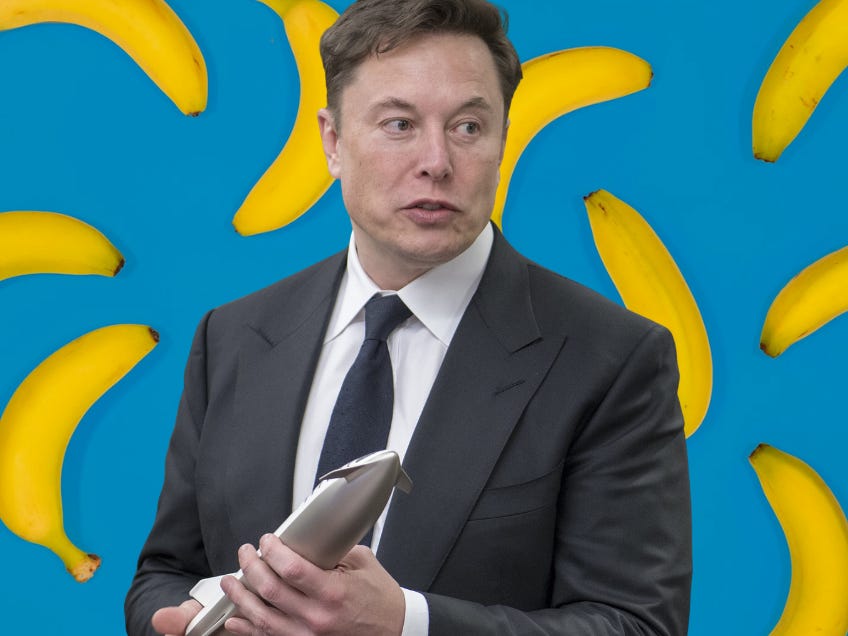
Now, economics is not my strong point, but even I know that Nathalie is talking nonsense in a way that will nevertheless get her audience cheering. Musk, she says, has hoarded all the bananas, and the rest of us won’t get our share – and yet he’s celebrated for it. In other words, he’s an evil man born of an evil system.
Only the economically illiterate could make this claim, resting as it does on the assumption that wealth creation is a zero-sum game – that one person’s wealth is another’s poverty (also known as the fixed pie fallacy). But wealth isn’t a fixed quantity to be divided and distributed. It’s something created. Musk’s billions came from companies he built, not from money he took from other people’s pockets.
It's the trillion figure that has people on the left fainting into their chaise longues. Left-wing commentators are pumping out dozens of articles on Substack alone today, frothing at the news that someone who’s built useful things will also profit by them. The writer Nick Cohen has just published a piece titled “Elon Musk: The trillion-dollar psycho — He has hastened the deaths of millions.” That’s the tone we can expect in the coming days, and Cohen is one of the less crazy ones.
There’s a dreary envy in much of this, of course. It’s not just the money – which, by the way, Nathalie, isn’t sitting in a Bank of America current account nudging him over the threshold for a free toaster. It’s equity, tied up in the companies he’s built. And underneath the envy is resentment that Musk has achieved things that most of his loudest critics couldn’t dream of. None of us can, really. The one thing these “creators” have built, and the least admirable, is audiences around a grudge against people who build actual, useful things. Building audiences isn’t something to be disdained in itself (I hope), since it’s what I’m doing here. But there’s a difference between criticising power and pretending financial gain from those efforts is theft.
There’s a better objection that gets drowned out by all this. It’s that wealth on this scale buys power and influence that’s hard to square with democracy – a project we all supposedly consent to on the understanding that we have a roughly equal say in how things turn out. Zuckerberg is another example of this problem. Here’s a private citizen whose decisions about speech and political content shape public perceptions and, by extension, public life for billions. That’s the thing worth discussing, not the bananas.
For the record, I find Musk insufferable and admirable in roughly equal measure.
The admirable part first. He’s obviously a business genius who has somehow created several multi-billion-dollar companies. I don’t doubt that much of it is driven by a genuine desire for human progress. It takes enormous optimism in humanity to do what Musk does, and optimism is in drastically low supply today. We’re teaching our children that the environment is a ticking time bomb and that another extinction-level event is always around the corner (pandemics, AI, and so on). We could instead teach them that humankind has an extraordinary record of solving problems. “Look at Elon Musk”, teachers might say. “He’s building the rockets that could one day take you to Mars”. But teachers don’t say this because, for most of them, Musk is Dr Evil, the quintessential villain, Trump but with maths skills. Sadly, Musk makes this all too easy to believe, for reasons I’ll get back to.