
When Leaders Sounded Like They Believed in Something
From Reagan and Thatcher to the age of spin, the strange decline of political conviction.
I would make a terrible leader. My voice, for one thing. It simply doesn’t carry. I practically have to use sign language in a crowded pub. A leader’s voice, on the other hand, must rise above the din in every sense and make even ordinary utterances sound consequential. When a person’s voice physically resonates, the meaning vibrates along with it. This is especially useful when the stakes are high, when a leader’s words must lift a people and give them courage. We think of Churchill’s stirring vow to “fight them on the beaches” or Kennedy’s appeal to “ask what you can do for your country”. But it also works the other way, making false sentiments sound a little more noble, dishonesty a little more authentic. Obama has a resonant voice, the smooth variety. Trump has it in that strange barking register. Then there was Thatcher, whose clipped, metallic delivery didn’t so much resonate as lance the eardrums like a nail gun.
Britain’s Keir Starmer, the latest prime minister to come and go, has one of the worst voices any leader could hope for. An adenoidal robot, Starmer is what an AI would think a technocratic prime minister should sound like. This is not exactly why he failed, of course, but it’s not irrelevant either. Successful politicians are not merely in the business of making arguments. They capture a mood, find the cadence, and give voice to the concerns of the people they’re elected to represent. A leader has to make a country feel that someone is speaking from a real place. Starmer failed on every count, as did his recent predecessors, making 10 Downing Street seem like an Airbnb for political office.
We’re used to despising politicians, but something feels different now. The political leaders of the late 20th century might have been ruthless or morally compromised, but they also possessed qualities that made them impossible to ignore. Their voices carried conviction, competence, or simple courage in a way that seems a little incongruous to us now. The current batch of Western leaders (Trump aside) often seems depressingly forgettable and mediocre by comparison, as if politics has become a recruitment process for people who respond well to media training and tick the right demographic boxes.
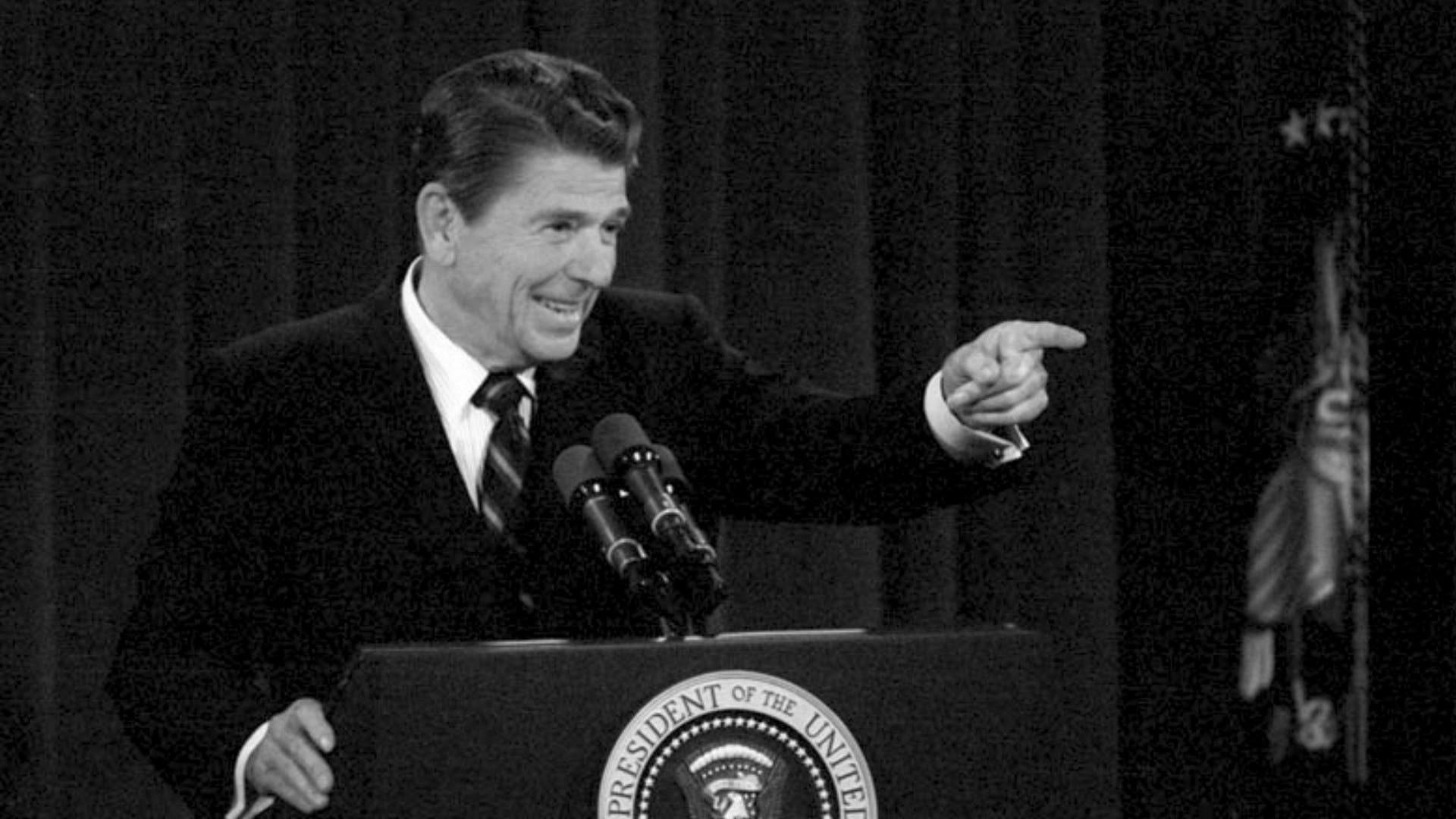
The first political leader I remember was the one who appeared on television in the corner of the living room. Children’s TV had a dedicated hour each day – we had three channels back then – and on each side of that were soaps and sports and, most vividly, the news showing the occasional mushroom cloud, a preoccupation with something called the USSR and, at the centre of things, someone I assumed was the President of the Earth and all-round figure of benevolence: Ronald Reagan. This was not entirely inaccurate.
Though my mature understanding of Reagan is retrospective, built from history books and YouTube clips, even as a child watching that screen, I could sense the humour and affability, as well as the solemnity of his historical declarations. “Tear down this wall”, he said, in a way that was impossible to refuse. Few leaders today would dream of uttering such commands to an enemy. Trump might give it the volume but has none of the gravity.
America in the late 1970s was starting to look like a nation in decline – inflation, humiliation abroad – so when Reagan promised a new morning in America, he was already engaging a receptive audience and few, I imagine, were inclined to doubt him. The genial certainty that his critics read as dangerous simplicity looks to me now like someone who understood that leadership is not only administration. It’s the ability to tell a nation what story it’s living inside.
On foreign affairs, Reagan seemed to grasp the Manichean drama of the Cold War in a way that technocrats, then and now, would have found embarrassing, which is probably why they underestimated him. Sometimes the world is not crying out for nuance, but for someone to call the thing in front of them what it is. The evil empire really was evil, and saying so plainly played a significant part in ending it.
Thatcher was the other political figure who loomed from the television, though with little of Reagan’s glamour and absolutely none of the humour. Thatcher was the unfunniest person alive in the 1980s, although she made great comic material for satirists. Where Reagan was sunny confidence, she was weather of a much harsher kind, like a tornado swinging a handbag while telling you to clear up the mess.
It took me many years to appreciate Thatcher because, right up to and including my university years, she was synonymous with all the worst things we were taught to associate with the right: selfishness, greed and a lack of compassion. Much later, I understood that she was an anomaly: Britain’s first female prime minister conquering an aggressively male-dominated arena through sheer conviction and total self-confidence, imposing direction on a country that had grown used to managed decay. By rights, she should be a feminist icon, but she had the wrong politics for that. In any case, she would have rejected any such accolade. For Thatcher, individuals succeed through discipline and hard work. She didn’t want to be treated as “a woman in politics” so much as a politician who happened to be a woman. Identity politics was an indulgence of the other side. She had work to do.
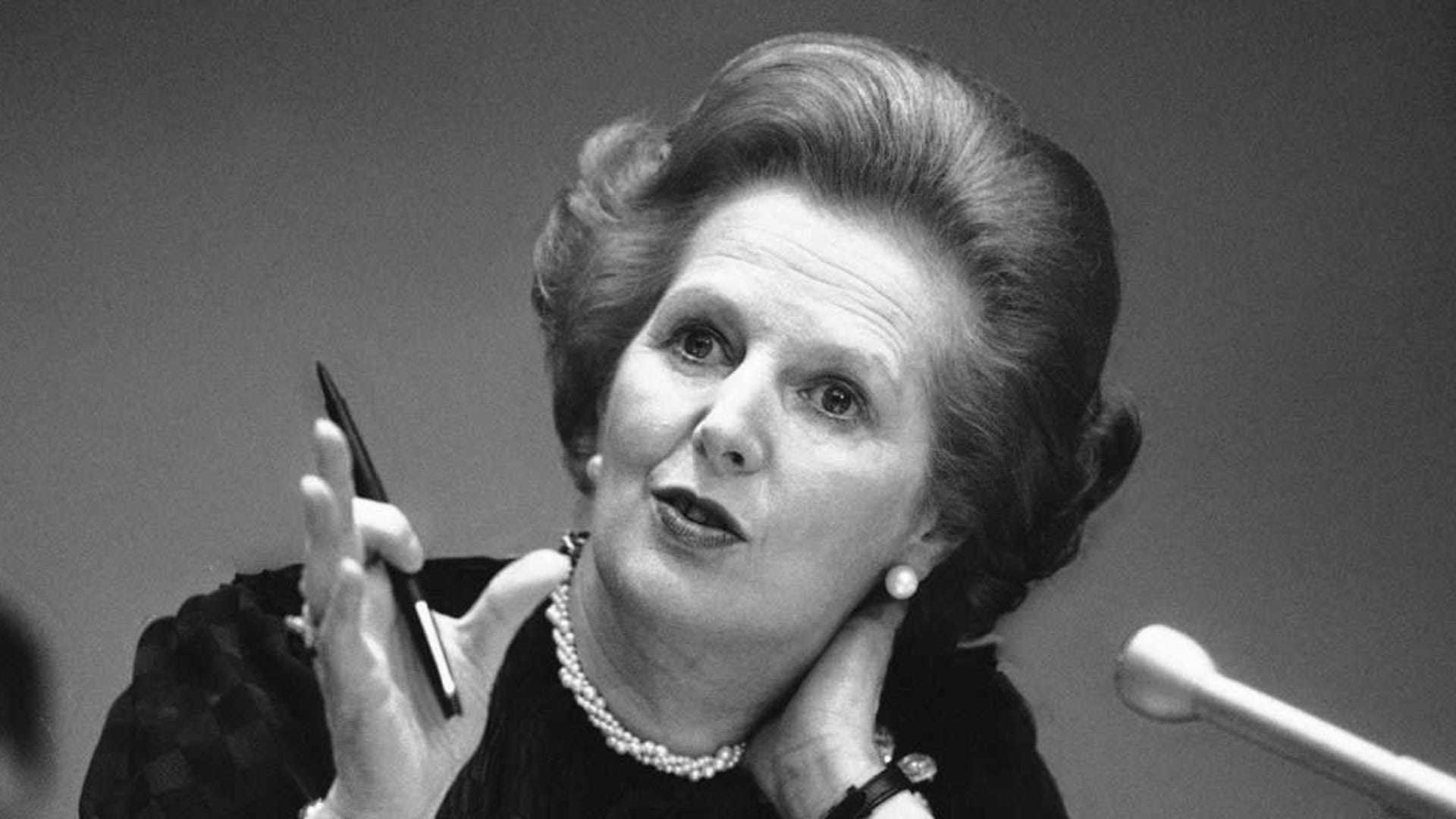
That’s not to say she wasn’t acutely aware of how she was perceived. She had a voice coach and took fashion seriously, never looking less than perfectly turned out. That hair was its own immovable life form. All of this amplified the qualities she already had rather than making up for any deficiency. The difference matters because the technique itself is not the corrupting variable. Reagan similarly brought immense craft from his days as a Hollywood actor and used those skills brilliantly to make that conviction travel further. It wasn’t a substitute for the real thing; it deepened it.
More than any other quality, I associate Thatcher with conviction, but in the end, conviction was also her downfall. She could pierce the hypocrisy and sanctimony of others with ruthless clarity, yet that same sharp eye remained blind to the human cost of that uncompromising resolve. Her reforms made her an object of hatred, and she remains one in the former mining towns and cities of Britain. She would have been crucified by social media, where every closure, every tearful interview with a coal miner’s wife and children would have become a rolling national melodrama. Even her most ardent admirers accept that Thatcher went off the rails at the end, while her harshest critics admit she was a force of nature. Britain never saw her like again. Modern politics produces politicians who explain why nothing can be done. Thatcher’s achievement (and “crime”) was to actually do things instead of just talk about them.
After a brief interruption by forgettable men came politicians heralding a new era and a new style. Clinton and Blair turned leadership into performance above all. They had the emotional intelligence that their immediate predecessors lacked, and empathy became the central cog in the machine of modern spin. The older political voice had been broadcast outward. Clinton and Blair brought it closer. I’m just like you, they seemed to say. I feel your pain. Call me Tony.
I liked Clinton immediately, because he returned that effortless American glamour to politics, and the southern lilt somehow instilled trust in my British ear. He just seemed so at home in the role. Here was a naturally gifted politician who combined the nerdiness of policy detail with the ability to read an audience and flatter anyone in it. He could sell a grey sky to an Englishman if he needed to. This was leadership of the personal kind. Clinton gave the appearance of someone who understood your pain – who felt it and expressed it better than you ever could.
But the same voice that could gauge a crowd and win its trust was also the voice that looked down the camera and said, “I did not have sexual relations with that woman”. When I look back at the clips, even the early ones, I sense I’m watching not exactly a fraud, but an actor – one who happens to be obsessed with politics and with women. Clinton is probably not a good man, and possibly a very bad one. But in the 1990s, scandal aside, he steered the Western ship through eight years of stability that we took for normal and which now looks like an aberration. His tragedy is that nobody remembers him for any of that.
What remains is the question no one quite asked of Reagan: what did Clinton actually believe? With Reagan, we knew he’d already switched from Democrat to Republican, not out of opportunism, but out of a fierce anti-Communism and an aversion to big government. “I didn’t leave the Democratic Party. The party left me”, he said in a line that I suspect many of today’s Democrats are saying to themselves. With Clinton, that core was harder to locate beneath the pragmatism. Then again, the 1990s were a brief holiday at the end of history, before history resumed on 9/11. He didn’t need conviction, only a steady grip on the wheel.
Blair became prime minister around four years into the Clinton presidency. I voted for Blair in 1997, my first time voting, and it seemed like an obvious choice. The Conservatives looked exhausted, and here was a new, modern style of politics for a Britain ready to make “progress”. We even gave it a name: Cool Britannia. How we scoffed at the futile efforts to scare us off. “New Labour, New Danger” ran the political ad. A quarter of a century later, that looks quaint. Blair ushered in progress, all right. A cultural revolution, to be precise. Britain looks very different today because of it – an unhappier country, I would say, though that’s a reflection for another essay.
On the question of leadership, I must concede that Blair was supremely gifted. Nobody has come close in British politics since for the simple but devastating combination of first-class intelligence and temperament. I almost wish he were in power now, just to lend the country some semblance of seriousness. But it was his mastery of the media that was the secret ingredient, and the most famous example was his handling of Diana’s death, in which he spoke of “the people’s princess”.
This was also, incidentally, when I first realised I didn’t understand my own country. The emotional incontinence that followed that tragedy exploded the myth of the national stiff upper lip. Or was it that Blair, through some dark magic, had somehow hypnotised the populace into a new emotional register? I still don’t know which it was – whether the feeling had always been there and Diana let it out, or whether something was done to us. But ever since, the country has struggled to meet matters of significance with anything like moral seriousness. Immigration, the NHS, Covid, even football – everything is an emotional drama in need of an adult to walk in and say, “pull yourself together”. That adult has never arrived.
But here again, the later question was fatal: what, underneath the performance, did Blair really believe? Iraq is where the sincerity settings were cranked up to eleven, and we heard about his Catholic faith and the fight of good over evil. I’m tempted to say that Blair’s conviction on Iraq was entirely real and utterly disastrous, born of hubris and moral vanity.
Even then, I struggled to believe a word of it, and that hasn’t changed since because somehow Blair has made conviction itself seem phoney and discredited in the British psyche. The voice carrying a genuine conviction and the one performing it can sound identical from the outside. Blair didn’t merely damage trust in one government but in fluency itself.
After him, every politician who sounded too smooth carried a faint whiff of the dodgy dossier. David Cameron, who became prime minister just a few years later, was practically a tribute act, which is why he became known as “the heir to Blair”. And he was on Team Tory, the first sign that Britain was being run by a seamless, managerial consensus, later known as “the uniparty”.
Back across the Atlantic, American leadership was responding to a vastly more complicated world. George W Bush was probably the worst possible candidate to handle 9/11, “a man who is unusually incurious, abnormally unintelligent, amazingly inarticulate, fantastically uncultured, extraordinarily uneducated, and apparently quite proud of all these things” in the words of Christopher Hitchens.
Obama returned articulacy to the White House, and today he might be seen as the ultimate version of the fluent politician. This was voice in its smoothest and most eloquent form, seducing even conservative America for a while, and even more so the rest of the world, whose leaders still go weak at the knees in his company. But one soon started to get the impression this was a meticulously stage-managed illusion created with the help of talented speechwriters and a compliant media. If Obama had a teleprompter in front of the bathroom mirror, few of his critics would be surprised.
Then Trump arrived like a man driving a golf cart through a Sunday picnic. Trump was a corrective of sorts, revealing that Obama’s world had been a stage, all the men and women on it merely players in a media system built for self-flattery. Trump’s voice is not remotely elevated, but it’s unmistakably alive and unrehearsed, giving voice to things polite politics has trained itself not to hear.
But despite the stark contrast in styles, Obama and Trump are what voice sounds like when it becomes detached from leadership and instead serves as a conduit for the passions of the tribe, channelling them rather than leading them.
The problem of leadership in the modern age is not merely this leader or that one, Labour or Conservative, Britain or America. It’s that we each carry a portal to a vast media landscape in our pockets, deforming the relationship between the leader and the led. The legacy media effectively put Obama’s voice through autotune while distorting Trump’s every utterance – prompting Trump to bypass them entirely and deliver his raw register via social media, which turns out to sound like hell anyway.
But Trump is the exception (because he’s always the exception). The rest of the West is run by men and women trained to perform the mannerisms of authority while lacking the thing itself – their words already drowned out by events over which they have no real control.
A leader’s voice is not just a matter of tone, but whether their words bear any relationship to the reality of the country they claim to lead. They call it communication, but it’s messaging and public relations; platitudes put to lift music.
The Gadfly recently passed 3,000 subscribers. If you’d like to support my writing, consider subscribing for free or upgrading. A paid subscription is 30% off until the end of June and gives you access to the comment section and the archive.
You might also like:


This started as a short Substack Note about Keir Starmer's resignation, but I went off on a nostalgia trip. Thanks for indulging me, and I hope you found it interesting. Perhaps it stoked a few memories of your own.
You'll almost certainly disagree with at least something in here, so share your thoughts. I'll respond to comments over the coming days.
Thanks as always to the supporters of The Gadfly who make this possible, and thanks for reading.