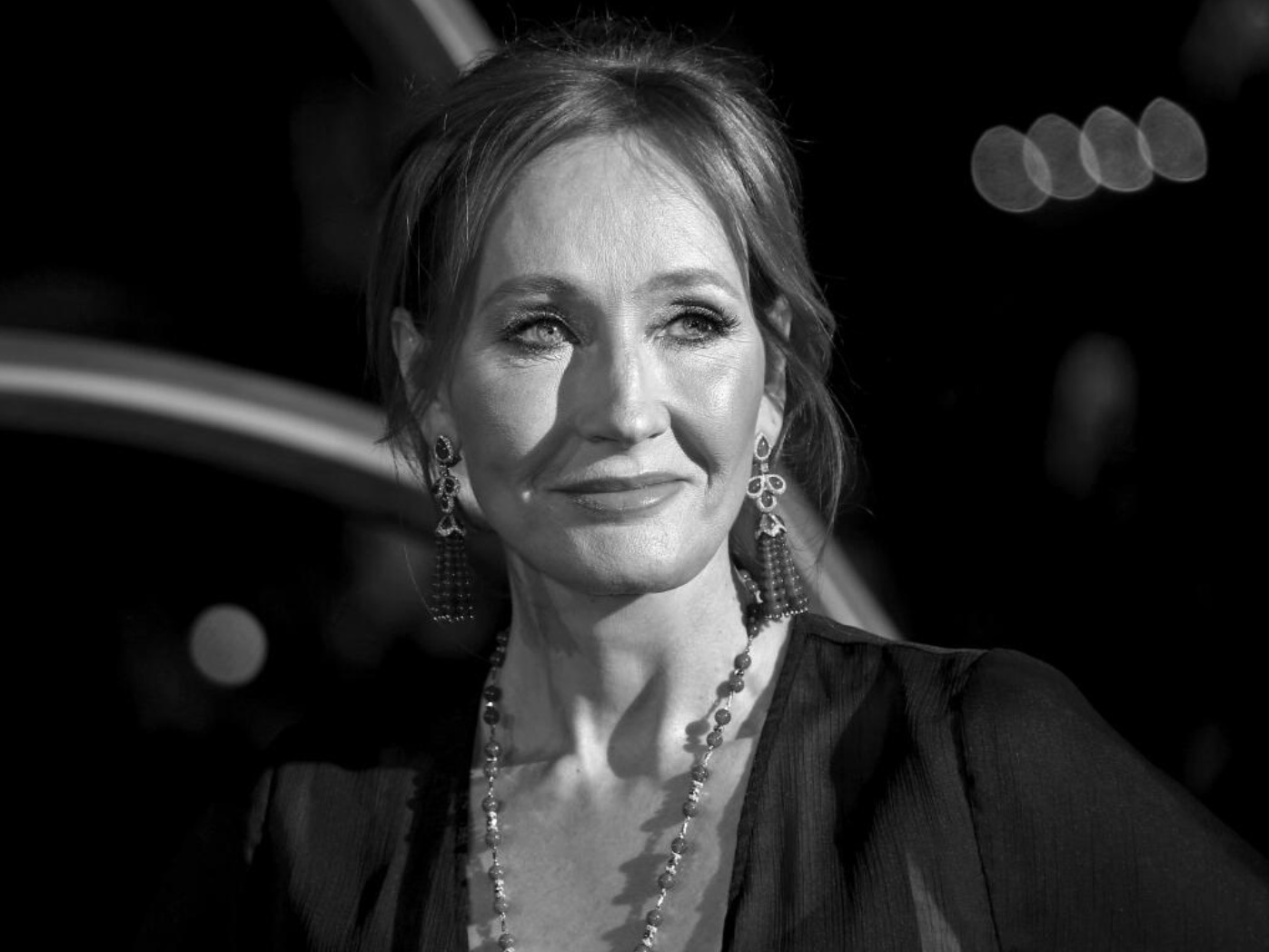
The Moral Courage of JK Rowling
How the author stood against trans ideology and refused to bow to the mob.
It takes courage to defend an unfashionable truth, especially when silence would cost you nothing and speaking would cost you everything. It’s rare in public life, but one person has consistently demonstrated this quality over the past five years while facing campaigns of vilification and intimidation that would break most of us. Despite efforts often led by influential members of the cultural elite, these campaigns have failed. The reason is simple: JK Rowling is right, and increasingly everyone knows it.
The issue isn’t complicated in itself, although activists work overtime to make it seem so. Some people experience genuine, persistent gender dysphoria – a recognised psychiatric condition causing real suffering. Other people are caught up in the social contagion – especially teenagers, who are fed trans propaganda on TikTok as an answer to ordinary adolescent angst. There’s a world of difference between the two. The first group, tiny in number, deserves compassion and careful, evidence-based treatment. The second needs patience, proper psychological support, and adults willing to speak a simple truth: feelings, however intense, aren’t reliable guides to irreversible medical decisions. There’s also a third group of people who are rarely discussed alongside the others. These are autogynephiles – men who experience sexual arousal from the thought or image of themselves as women.
Rowling has always acknowledged this distinction between the first two groups. Her position has never been “trans people don’t exist” or “trans people don’t deserve support.” It’s been that women’s rights matter, children need protection, and the systematic dismantling of safeguarding protocols in the name of inclusion has gone catastrophically wrong. These aren’t fringe concerns but expressions of common sense shared by the vast majority of people. They just happen to collide with an activist movement that has captured major institutions.
The luxury of performance
Emma Watson embodies everything Rowling doesn’t: moral certainty without consequence, compassion without cost, activism as personal branding. Watson can proclaim “trans women are women” because she’ll never share a prison cell with a male sex offender who has discovered gender identity as a ticket to the women’s estate. She’ll never compete against biological males. She’ll never work in a rape crisis centre where she’s forced to accept counsellors with penises, because excluding them would be “discriminatory”.
This is a prime example of what Rob Henderson calls luxury beliefs: strongly held opinions that confer status on the believer while imposing costs on others. The people most influential in championing unrestricted gender self-identification are insulated from its consequences. They don’t work in women’s prisons or compete in women’s sports. They don’t use public changing rooms; their daughters aren’t forced to share school bathrooms with boys.
Watson and her kind trade in the currency of fashionable opinion. Declaring support for trans rights costs nothing in her social world – if anything, silence might provoke suspicion. This is how it works: drop a slogan into any media interview – “Nonbinary people are valid”, say – and effortlessly win the approval of all the right people while demonstrating sensitivity to “marginalised communities”. That the marginalised in question might include male sex offenders gaming the system is irrelevant. What matters is the performance, not the outcome.
The cruel irony is that many of these same celebrities have spent years championing children’s welfare in other contexts. Yet when it comes to children being fast-tracked into experimental hormone treatments, hesitation becomes “transphobia” and scrutiny becomes “hatred”. Kids matter, but only so long as their needs or your concerns don’t conflict with fashionable ideology.
The scandal of Tavistock
The collapse of the Tavistock Gender Identity Development Service should have been a watershed moment. The Cass Review – an exhaustive, independent investigation – laid bare a medical scandal. Here was a clinic prescribing life-altering treatments to children based on minimal evidence: therapists too afraid to explore underlying mental health issues for fear of accusations of conversion therapy; a systematic abandonment of normal medical safeguarding that would be unthinkable in any other branch of paediatric care. (See: The Trans Social Contagion Is Unravelling).
Dr Hilary Cass, a respected paediatrician with no dog in the political fight, found that the evidence base for paediatric gender medicine was “remarkably weak.” She concluded that many children presenting with gender distress had underlying conditions that needed addressing first: things like autism, trauma, depression, and anxiety. Childhood gender dysphoria tended to resolve naturally through puberty. Most damaging of all, she concluded that the affirmation-only model, far from being compassionate, had prevented proper psychological assessment and care.
Since then, Sweden, Finland, and Norway – not exactly bastions of reactionary, right-wing thinking – have all dramatically restricted paediatric gender medicine after reviewing the evidence. They found what Cass found: weak evidence, poor outcomes, and troubling signs that vulnerable children were being harmed by treatments that activists insisted were life-saving.
Despite this, British and American activists responded not with reflection but with rage. They attacked Cass personally, dismissed the review as politically motivated (it wasn’t), and continued insisting that any restriction on paediatric transition amounts to “genocide”. The pattern is telling: when the evidence contradicts ideology, they attack the evidence.
The substitute religion
“When men stop believing in God, they don’t believe in nothing — they believe in anything”. So runs the famous line attributed to Chesterton. Likewise, Roger Scruton warned repeatedly that when traditional sources of meaning collapse, people don’t become more rational; they become more susceptible to substitute religions. Gender ideology (gender theology might be more accurate) functions as precisely that: a belief system complete with unfalsifiable dogma (”trans women are women”), sacred victims (anyone identifying as trans), heretics (anyone questioning), ritual declarations of faith (pronouns in email signatures), and excommunication for apostasy.
Like all substitute religions, it’s especially appealing to those who’ve lost traditional faith but retain the psychological architecture of religious thinking. We might think of the post-Christian society in precisely these terms. The form remains: the need for moral certainty, community, purpose, clear distinctions between righteous and wicked – but the content has shifted. This explains much about progressivism in general and the trans movement in particular – above all, its imperviousness to evidence: you can’t fact-check a religion.
What makes this particularly insidious is the ideological capture of institutions that should serve as reality checks. Universities, medical establishments, media organisations, even the Church of England – all speak from the same script. Once an ideology achieves institutional dominance, individual dissent becomes professionally dangerous. Better to mouth the pieties, suppress your doubts, and avoid the mob.
Because the punishment for heresy is swift and severe. Academics lose positions, therapists lose licenses, and women lose their jobs for stating that biological sex is real. The message is stark and unapologetic: conform or be destroyed. That so many people have conformed reveals not the strength of the arguments but the effectiveness of the intimidation.
The corruption of compassion
Arguably, the cruellest aspect of this ideology is in how it corrupts the language of compassion. Activists have convinced many well-meaning people that affirming a child’s trans identity is the caring response, while encouraging patience and reflection is harmful. But this is an exact inversion of reality. A compassionate response to a distressed teenager would be careful assessment, treatment of underlying conditions, and acknowledgement that adolescence is inherently confusing and that feelings, however intense, aren’t always reliable guides to permanent decisions.
But in therapeutic culture, patience is recast as cruelty, and caution has become violence. The only acceptable and “compassionate” response is immediate affirmation, regardless of long-term consequences. We’ve built an entire medical-industrial complex around pathologising everyday emotions, unpleasant as they sometimes are. But anyone suggesting that feelings might be transient or symptoms of other issues is expelled from polite company.
The result is predictable and depressing: a sharp rise in young people, particularly teenage girls, identifying as trans. Many have underlying mental health conditions, while others are part of friendship groups whose members suddenly discover trans identities simultaneously. Many of the same will later regret the irreversible medical interventions foisted upon them by opportunistic doctors and cynical ideologues.
Things are changing, though. Detransitioner testimonies are already accumulating. The lawsuits are coming. And when the full extent of this scandal becomes undeniable, as it inevitably will, the people who championed it will pretend they were not quite part of it, or claim to be pawns in someone else’s game. Then they’ll quietly move on to their next cause.
Standing alone
This is why Rowling’s stance matters. She’s not a politician calculating electoral advantage. She’s not a provocateur courting controversy for clicks. She’s someone who could have enjoyed her enormous wealth alongside uninterrupted waves of public affection, an unimpeachable legacy assured. Instead, she chose to speak uncomfortable truths – because they are true – and because the alternative is watching vulnerable people get hurt.
This also explains why the campaign against her has been vicious. The world’s most successful author can’t be easily dismissed or ignored. She’s too successful, too independent, too demonstrably compassionate in her extensive philanthropy. She’s also funny and can play the Twitter/X game better than any of her critics, driving them mad in the process. Her record of supporting women’s causes and children’s welfare is unassailable.
So her critics resort to misrepresentation, claiming she denies trans people’s existence (she doesn’t) or wants them harmed (of course not). At the extremes, they fantasise about her death on social media and threaten her with violence. In doing so, they prove her point about the authoritarian instincts lurking beneath the rhetoric of inclusion, the cruelty masquerading as kindness.
Reality has already vindicated her, and history will go further – perhaps remembering her as much for defending women and children as for creating Harry Potter. The Cass Review was only the beginning. Detransitioners are speaking out, lawsuits are piling up, and the evidence against affirmation-only care keeps growing.
In a decade, even the yawning liberals, the “why do you care so much?” crowd, will look back at this period with clear-eyed horror; horror that it was allowed to happen, and fury at the institutions that enabled it. In time, they’ll ask where the safeguarding professionals were, why the medical ethicists were absent, and how the feminists let it pass. True, some were silenced, and others were afraid. But many went along because the social rewards of appearing compassionate outweighed the difficulty of defending unpopular truths.
Rowling made a different choice. She showed that moral courage isn’t about saying popular things loudly; it’s about saying necessary things when silence would be easier.
The professional activists and ideologically captured will move to their next cause when this one becomes unfashionable. The children harmed by their ideology will live with the consequences forever.
And history will remember who stood up when it mattered.
You might also be interested in:


Thanks to everyone who made it to the end. I know it’s a long read, but there was a lot to cover. If it struck a chord*, do pass it on!
I should have said more in the piece about those quietly doing the right thing without Rowling’s safety net – the teachers, doctors, and others who speak up with far more to lose. I’ll make sure to honour that in a future post.
*I see a few ‘lively’ comments are coming in, as expected. I’ll leave them there – they speak for themselves.
Brilliant piece. Rowling has shown incredible courage when she could have just stayed quiet and enjoyed her millions. History will vindicate her and all these slebs will pretend they never went along with it. Thank you for writing this.