

Send in the Keffiyeh Clowns
Why the "pro-Palestine peace marches" are the biggest circus in town.

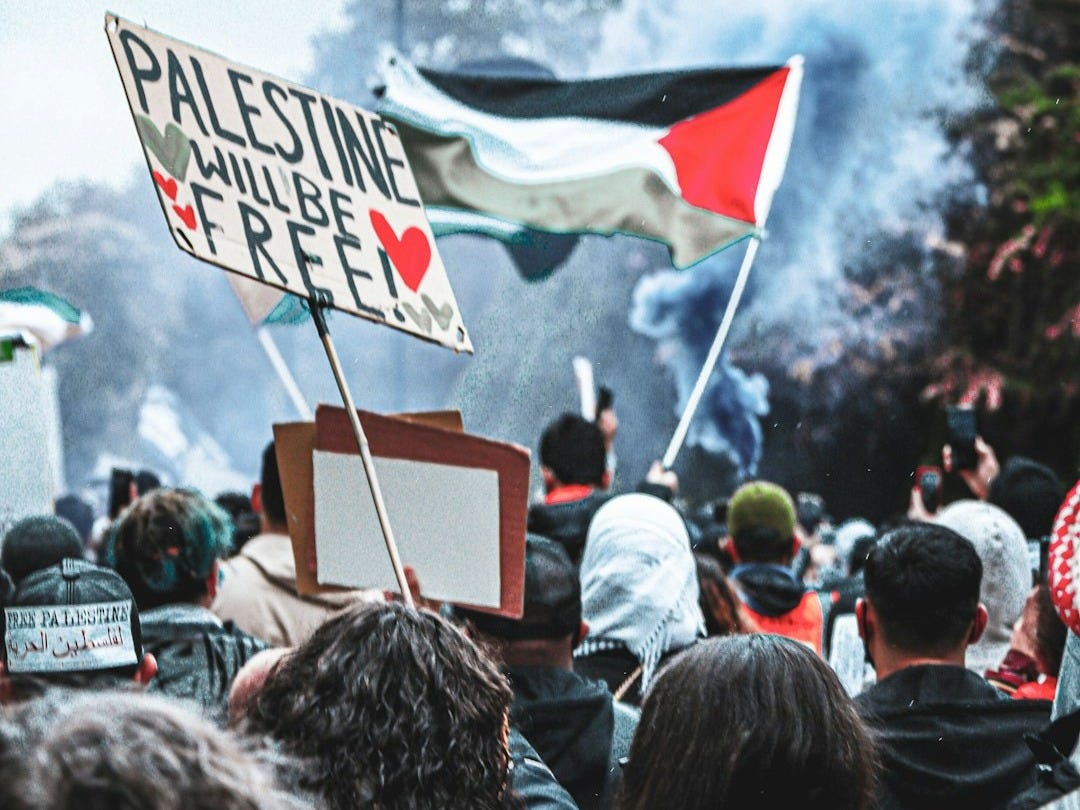
Something revealing happens when wars end – or threaten to end, as is the case with the Israel-Palestine ceasefire. The people who screamed loudest for peace now can’t seem to find their voice. The ecstasy of righteous fury has given way to the come-down that inevitably follows periods of intoxication. Confused and disoriented, they search for reasons why this peace won’t do: the ceasefire isn’t comprehensive enough; the terms favour the wrong side; the timing is suspicious. Peace, it turns out, was never really the point.
The last few years have introduced us to new members of the activist class. These are a strange hybrid of professional protesters and outrage merchants, keffiyeh-clad leftists and Islamofascists. Resolution in the Israel-Palestine conflict signals unemployment for these protesters. Worse, it heralds the absence of meaning. Why? Because they’ve built whole identities based on righteous anger, LinkedIn-optimised careers on perpetual crisis and social capital from being more-radical-than-thou. Peace threatens all of this hard-earned bounty. War sustains it.
The psychology at work here is straightforward but ugly. Activism was once (and sometimes still is) a noble endeavour. It has led to significant achievements, including women’s suffrage, the civil rights movement, and other notable wins for civilisation. But in recent years, it has become less about achieving justice and improving society than maintaining the performance of compassion and empathy. The closer you look at the actors on this stage, the clearer it becomes: activism has become moral exhibitionism. The cause provides meaning, a community of like minds, and the thrilling sensation of moral superiority without the tedious work of actually solving anything.
If you’ve ever wondered how these movements become more extreme over time, this is why. What motivates the activist is not the cause per se, but the thrill of being at the heart of something important. This is organised self-righteousness that has no interest in pragmatic solutions, scorns them even, because compromise means negotiating with the enemy, which means conceding that the enemy might have a point. But more than this, achieving the objectives they ostensibly demand would bring an end to the movement. It would rob it of its real purpose, which is different to the stated one.