Knock knock.
Who’s there?
The police. You posted something on social media nine months ago, and someone has taken offence. These five other officers are here to escort you to the station for an interview.
Not a terribly funny joke, I’ll admit. In fact, it isn’t a joke at all, but reality in Britain in 2025. The country that gave the world liberal democracy and the foundational texts on freedom of speech now dispatches a police squad to your nan’s bungalow because she commented “we’re full” on Facebook beneath an article about immigration.
I exaggerate but only slightly. The Times reports that Britain’s police are making 30 arrests a day for “offensive posts on social media and other platforms”. That’s 11,000 arrests per year. For writing words. The knife-crime epidemic will have to wait, presumably.
Britain’s descent into unreason takes many forms – immigration chaos, economic self-harm, the refusal to look reality in the eye on almost everything that matters – but it’s this strange and deeply uncharacteristic policing of speech that most clearly reveals a country no longer in its right mind.
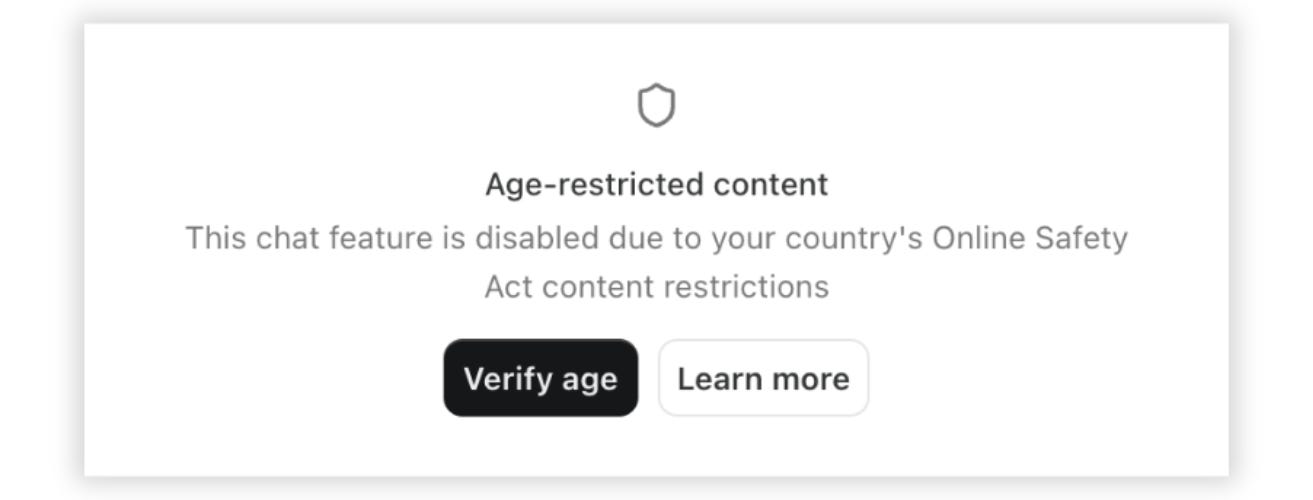
I feel it keenly because I write articles on controversial topics ranging from trans ideology to the rise of Islamism. I say things like “men cannot get pregnant” and “some cultures are better than others”. This week, Substack informed me I need to scan my face to keep using its chat feature, in compliance with Britain’s new Online Safety Act. It’s a small pop-up box, but it brought that knock on the door a little closer.
Describing reality now carries the risk of serious reputational harm and even legal prosecution. The UK government put it explicitly in a chilling tweet, which simply read: “Think before you post”. This is what Orwell meant by thoughtcrime, except Big Brother is now someone called Darren who works in the Metropolitan Police’s non-crime hate incident (NCHI) department.
This creeping authoritarianism is working. We see it in the normalisation of self-censorship – that little alarm bell in the corner of the mind, poised to go off when we wander into controversial territory. It’s in the moment you hesitate over a phrase or delete a sentence because you’re not sure where the invisible lines are any more. Most of us will never see a police officer about a Facebook post, but many of us are becoming attuned to the idea of wrongthink in our own minds.
In Areopagitica (1644), Milton argued that truth didn’t need protection from error; it needed freedom to contend with falsehood:
“Though all winds of doctrine were let loose to play upon the earth, so truth be in the field, we do injuriously by licensing and prohibiting to misdoubt her strength. Let her and falsehood grapple, who ever knew truth put to the worse, in a free and open encounter”.
This was the principle, later developed by John Stuart Mill, that Britain gave the world. Trust free people to hear arguments and judge for themselves. Let truth emerge from the free and open exchange of ideas.
That was a nice idea while it lasted.
The Online Safety Act (OSA) came into force in the summer of 2025, ostensibly to prevent children from accessing harmful content. No sane person could argue with its intentions when stated like that, which is precisely how it passed. But the remit is obviously much broader. Millions of people now cannot access obviously harmless material without submitting personal data. In practice, this very act has taught millions of British citizens how to evade its own laws – many becoming overnight experts in the use of VPNs and other privacy tools.
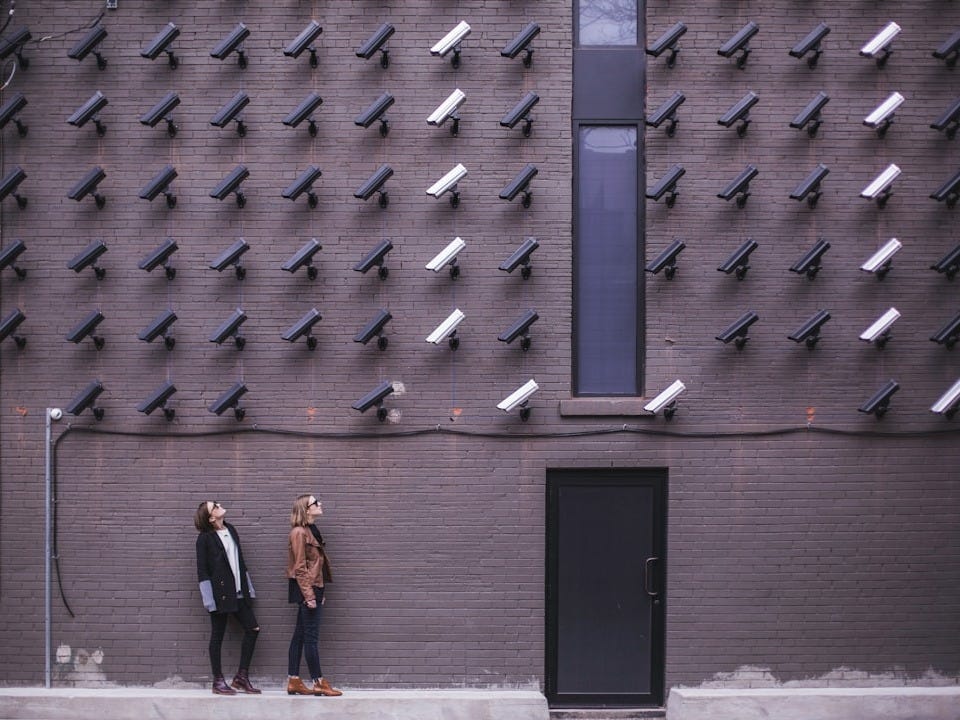
But the broader and deeper effect is to normalise mass surveillance. This is just how things are now: hand over your biometric data to watch a parliamentary debate. All in the name of child protection. None of this is to deny that children need protection from genuine exploitation and abuse – of course they do. But the tools are blunt and easy to bypass. And they create new risks: vast biometric databases waiting to be hacked or exploited by malign powers.
In an abhorrent irony, these measures have effectively silenced child victims of grooming gangs. In July 2025, X.com censored the testimony from survivor and campaigner Sammy Woodhouse, in which she detailed the brutal rapes and abuses she suffered as a young girl. In compliance with UK laws, the platform censored the “graphic content” because it was deemed too disturbing for British eyes without age verification. The actual abuse happened. The prosecution happened. But hearing a description of it? That requires a face scan. Britain will let grooming gangs operate for years, only to censor the survivors when they speak out.
The OSA is just the latest example of the state reaching ever further into our private lives, disguised as measures to protect the vulnerable. Counter-terrorism powers, designed to tackle genuine security risks, are now used to investigate citizens for conduct no reasonable person could describe as a threat.
In November 2024, Telegraph columnist Allison Pearson was visited by police investigating a tweet she’d posted a year earlier. In a parody of Kafkaesque evasion, they wouldn’t tell her the nature of the offence or show her the offending tweet – just that she’d done something bad. The investigation eventually collapsed, but the message was chilling: your speech can be criminalised retrospectively, and you won’t know you’ve crossed the line until officers arrive at your door.
Three years earlier, Isabel Vaughan-Spruce was arrested twice for praying near an abortion clinic – not for obstruction or harassment. For standing quietly with her own thoughts. The charges were eventually dropped, but only after she’d been handcuffed, detained, and prosecuted. The process was the punishment.
Then there’s Deborah Anderson, an American citizen living in Slough. A police officer visited her at home after someone complained about a Facebook post. The scene that unfolds is unreal – the sort of thing a low-budget TV drama would have imagined for dystopian Britain a few years ago.
The officer won’t tell Anderson which post had caused offence. Anderson, undergoing chemotherapy for cancer, is told she can either apologise or be interviewed at the police station. She refuses. ‘Are there no houses that have been burgled recently, no rapes, no murders?’ she asks. ‘Then why aren’t you out there investigating those?’
It’s the question anyone watching wants to ask. The officer has no answer, presumably because saying what this is really about – that policing hurt feelings is easier than policing actual crime – would look even worse.
Britain once defended liberal values even when the cost of doing so was practically suicidal. It stood alone against Hitler, promising never to surrender. It assumed that free people could be trusted to hear arguments and make their own judgments, that bad ideas gave way to better ideas, and that state power should be constrained even in pursuit of worthy goals.
John Stuart Mill crystallised this principle in On Liberty:
“The only purpose for which power can be rightfully exercised over any member of a civilised community, against his will, is to prevent harm to others. His own good, either physical or moral, is not a sufficient warrant”.
Britain has inverted this completely. The state’s role is no longer to protect liberty but to manage it – to decide what citizens should see, read, and say, all in the name of protecting them from harm. And harm has been redefined to include offence and exposure to ideas considered dangerous by the authorities. Conveniently, this also helps shield the state from criticism of its own failures.
The strategy is transparent. First, identify a genuine harm – terrorism, child abuse, online bullying. Second, grant extraordinary powers to tackle it. Third, expand those powers incrementally until they govern everyday life. Finally, silence objectors by suggesting they support the original harm. Oppose facial recognition? You don’t care about exploited children. Question counter-terrorism powers being used against journalists? You’re soft on extremism. Perhaps you’re even the extremist.
Crucially, once the logic is written into law, it never gets dismantled. You might trust the present government to use these tools responsibly and ethically, but the real test is whether you’d trust the worst government you can imagine with exactly the same powers. By the time you discover the answer is no, the tools might be too embedded to take back.
Britain gave the world the rule of law and instilled in the Western mind the value of competing ideas. George Orwell, writing from this same tradition, understood what was at stake:
“If liberty means anything at all, it means the right to tell people what they do not want to hear”.
Britain today is a story of managed decline – the one thing at which it now leads the world. The monitoring of wrongthink is sadly apt for a country that has lost confidence in itself and no longer understands its own foundational values. The danger is that a culture which normalises the knock on the door eventually stops needing it, because people have learned to keep their thoughts to themselves.
History will surely record that among Britain’s greatest contributions was the invention of liberal democracy. But it might yet record another: showing how easily it can be lost – not by revolution or invasion, but through the gradual accumulation of small surrenders. The country that once shaped the liberal mind lost its own to the conviction that a nation’s first duty is to protect people from themselves – and the state from accountability.
You might also like:


If you found this piece useful or thought-provoking, tapping the ❤️ at the top helps more people discover it. And if you’d like future pieces sent straight to your inbox, you can subscribe above. Thanks.
Excellent. Captures the darkly comic, absurd and sinister all at once. What strange place the UK has become.